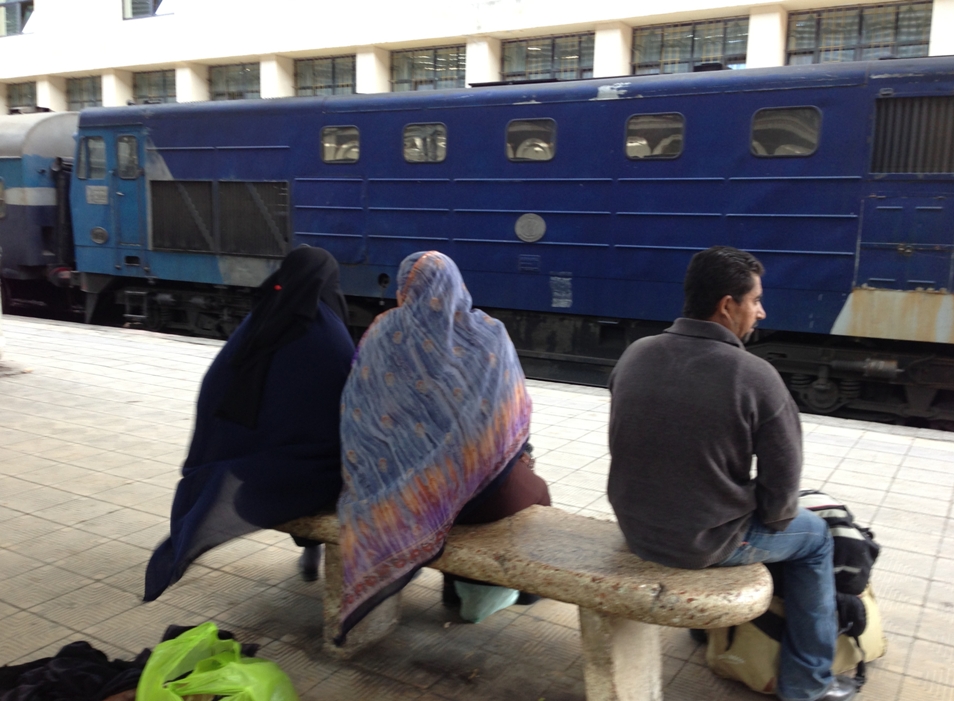
ALEXANDRIA Railway Station – sometimes trains are not on time!
More from Egypt soon

Brigitte
ALEXANDRIA Railway Station – sometimes trains are not on time!
More from Egypt soon
Brigitte
When I stayed at the New Memnon Hotel, on the West Bank of the Nile near Luxor, I found out that the owner of the hotel, Sayed is also the owner of the NEFERTARY PAPYRUS INSTITUTE where still today papyrus is made. 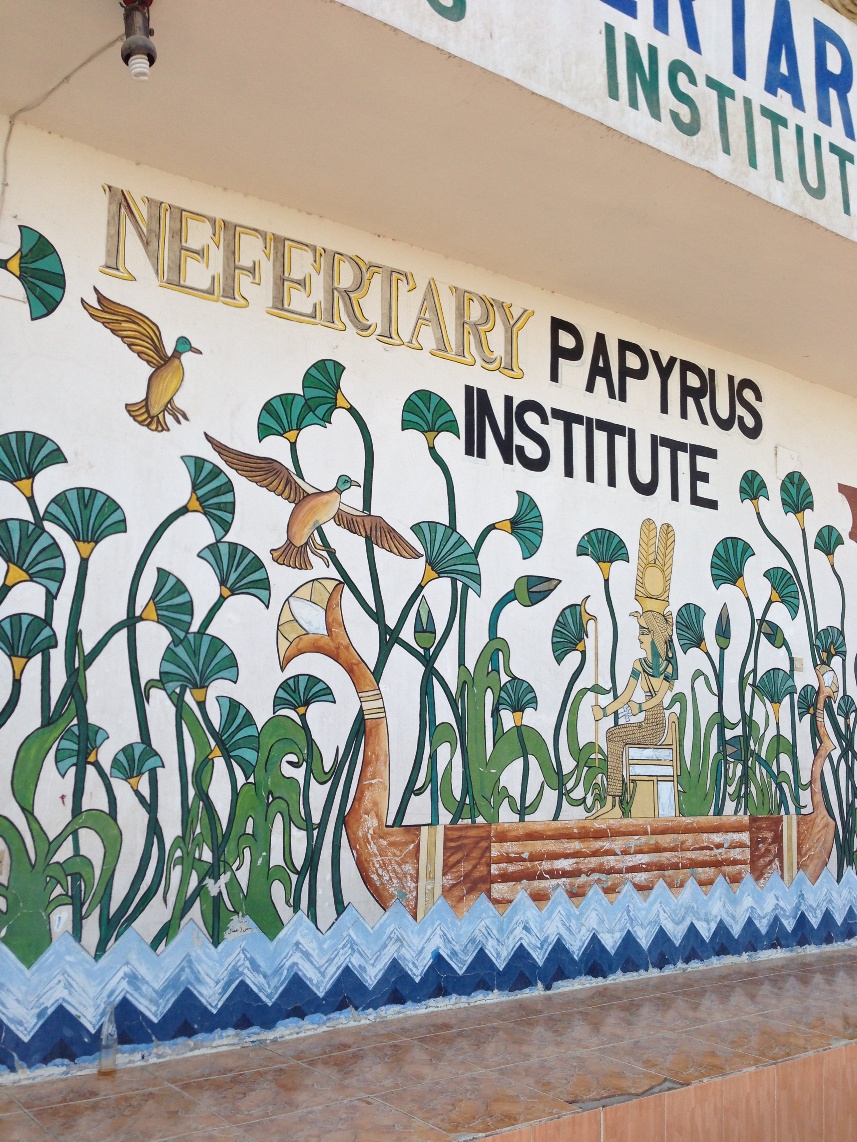
Papyrus, is a thick paper-like material that was first produced by the Egyptians more than 300o years ago. Much of Egypt’s history was recorded on papyrus, including the Book of the Dead, which was found in the tombs of the pharaoh’s , or high-ranking officials, describing their life and times.
While visiting the Nefertary Papyrus Institute, Mohamed, the brother of the owner showed me how papyrus is made – and with the following pictures I am happy to share this experience with you. – First we went to his garden to look at the papyrus plant. It is a fuzzy looking bush with brush-like flowers shooting out of solid long stems.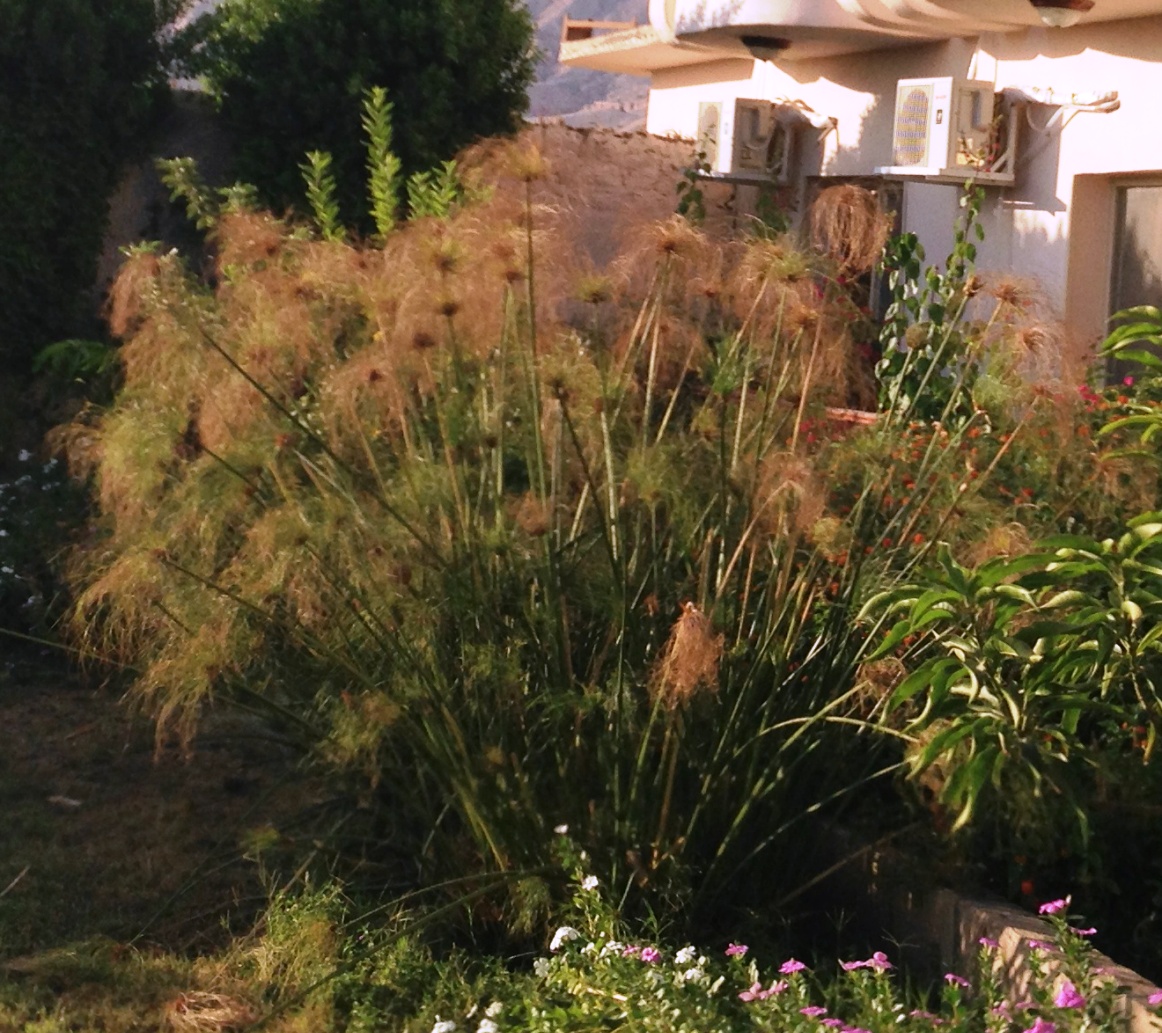
Mohamed removed one of the stems, and when we were back at the store, he removed the outer rind and cut the sticky inner pith into thin strips which were then put into water to soak. 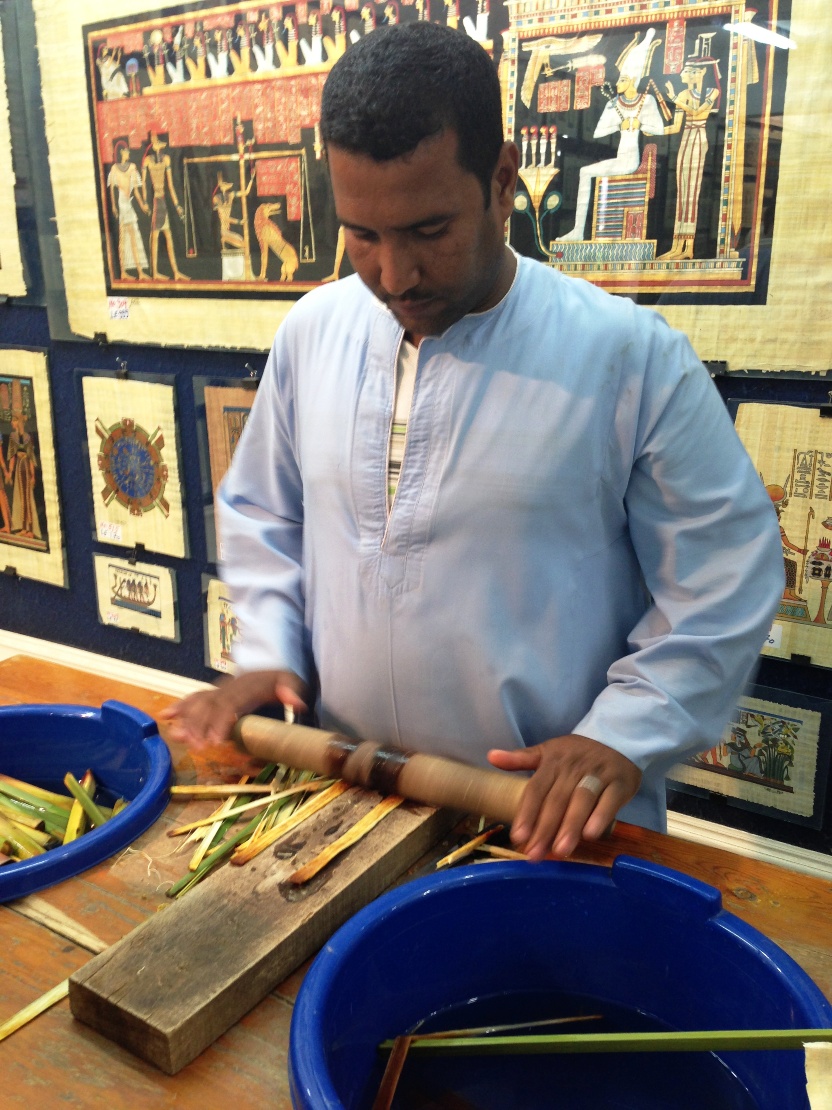
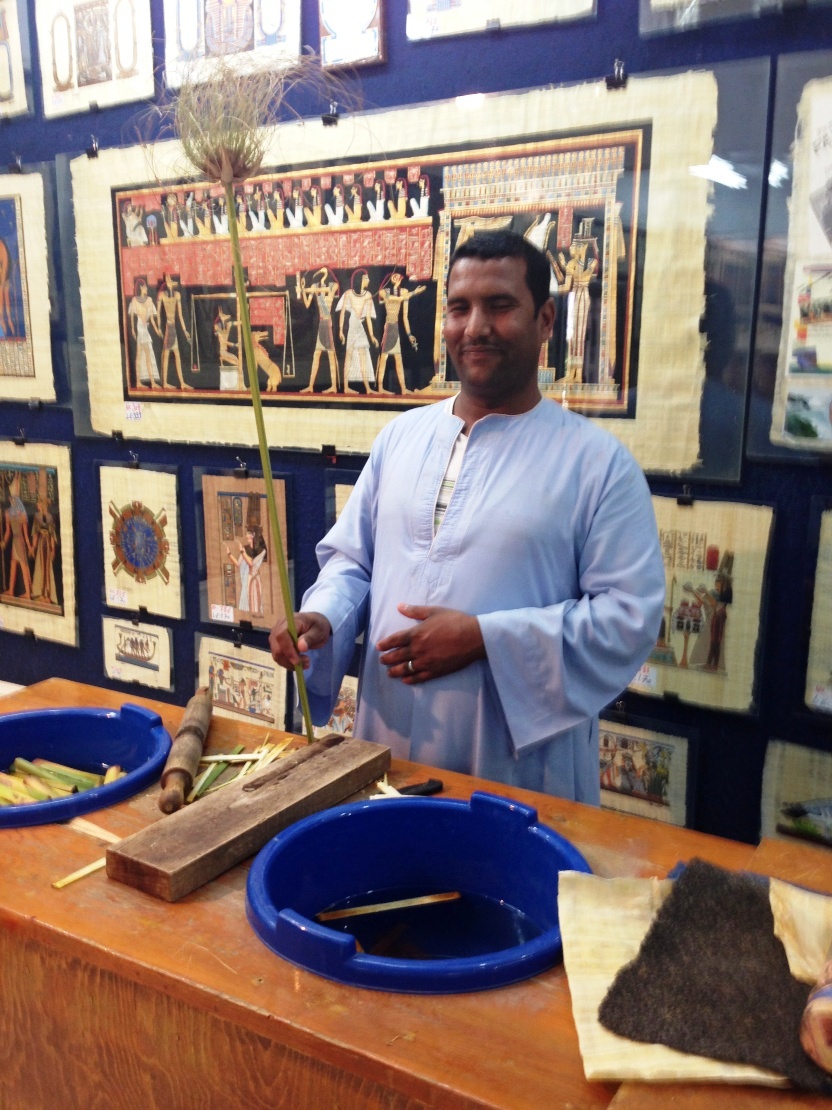
When the strips are soft, they are placed side by side on a wooden board, the edges slightly overlapping, and then another layer of strips is placed over it at right angle, and to help them stick together a roller is passed over them. After that they are placed in a press, where they stay until dry.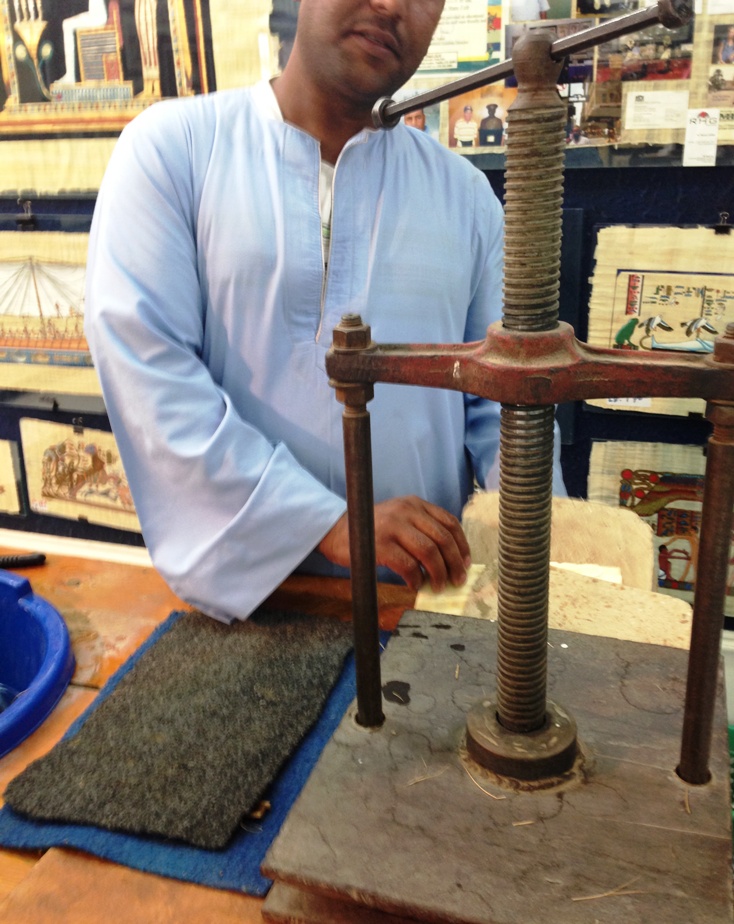
The sheets of papyrus are small and if a bigger piece is needed several are glued together.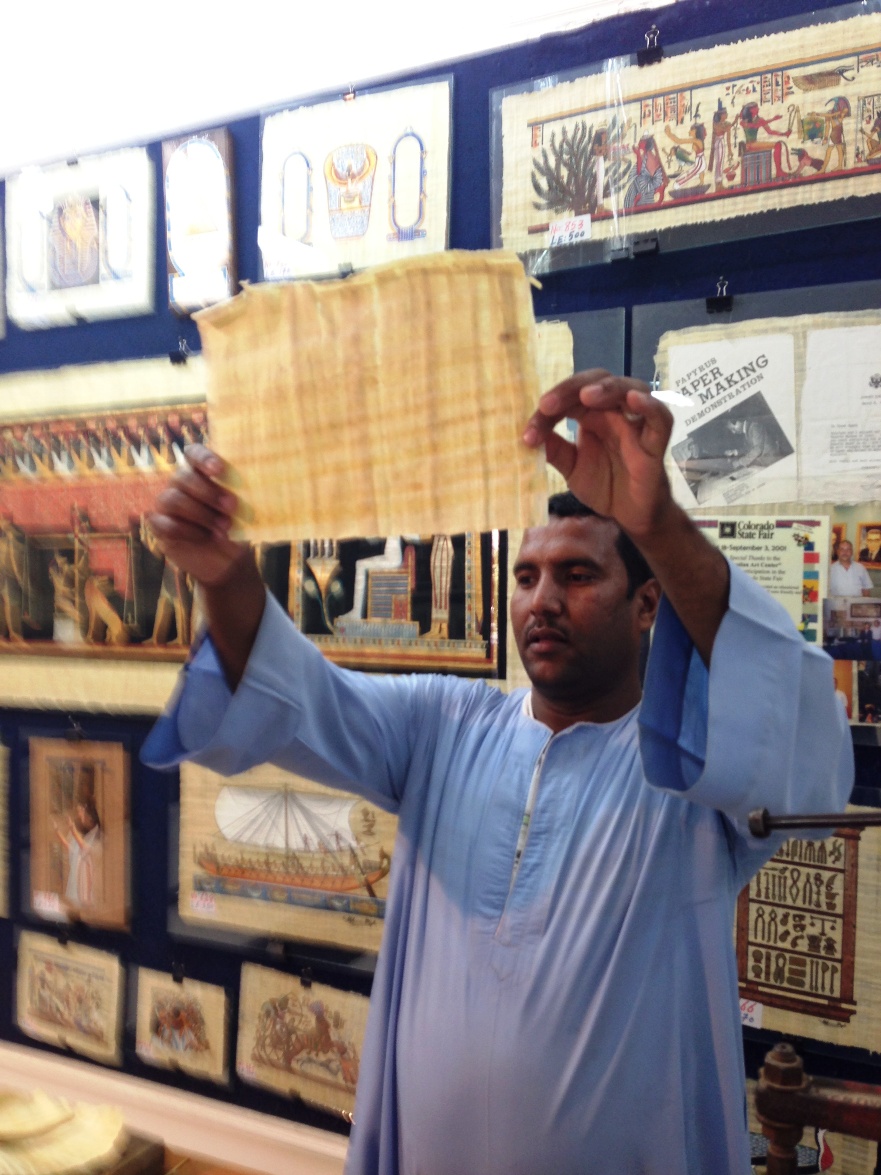
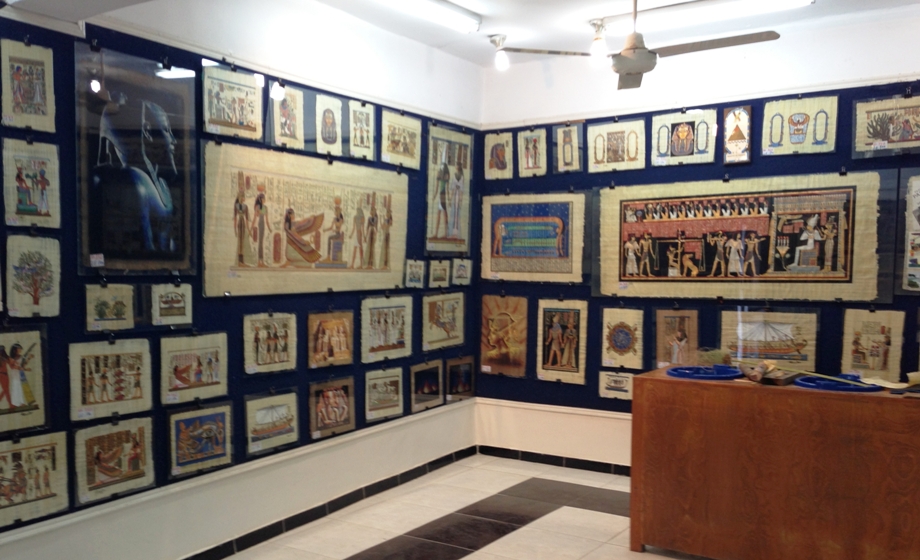
The papyrus made at the Nefertary Papyrus Institute today is used by local artists to recreate ancient Egyptian life. The store is filled with hundreds and hundreds of exquisitely hand painted designs – I wanted them all – but having to choose, I came home with these two ducks 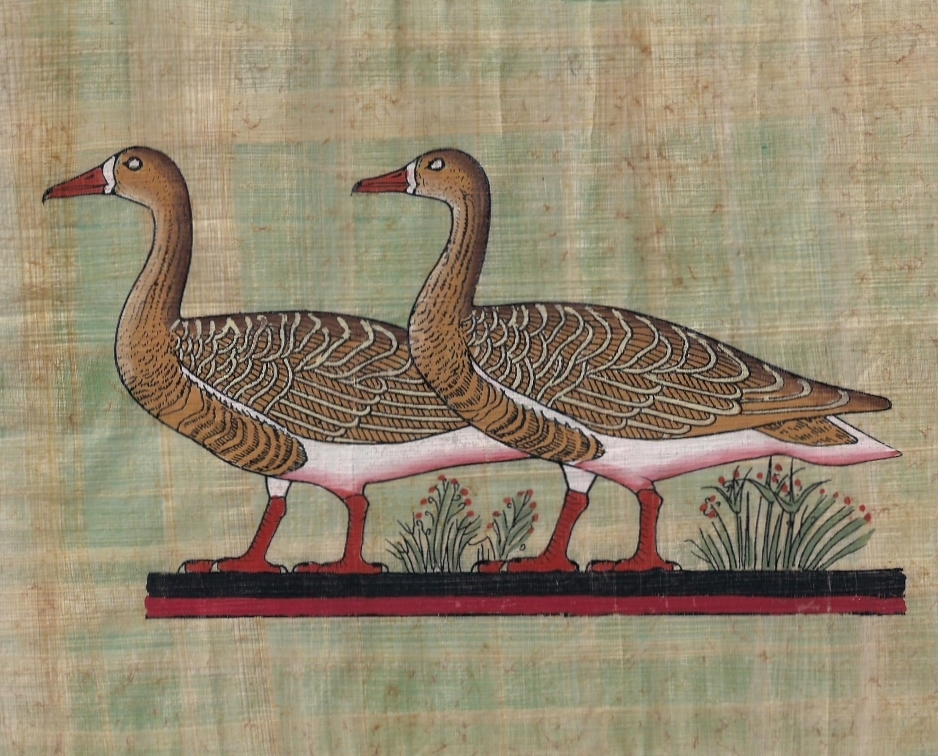 – the papyrus, the beautiful design, the vibrant colors, the delicate hand of the artist are all an attempt to hang on to the past a little longer.
More from Egypt soon
Brigitte
PS. If you are ever on your way to the Valley of the Kings, you can’t miss the Nefertary Papyrus Institute – it is on the left side before you come to the Colossals of Memnon.
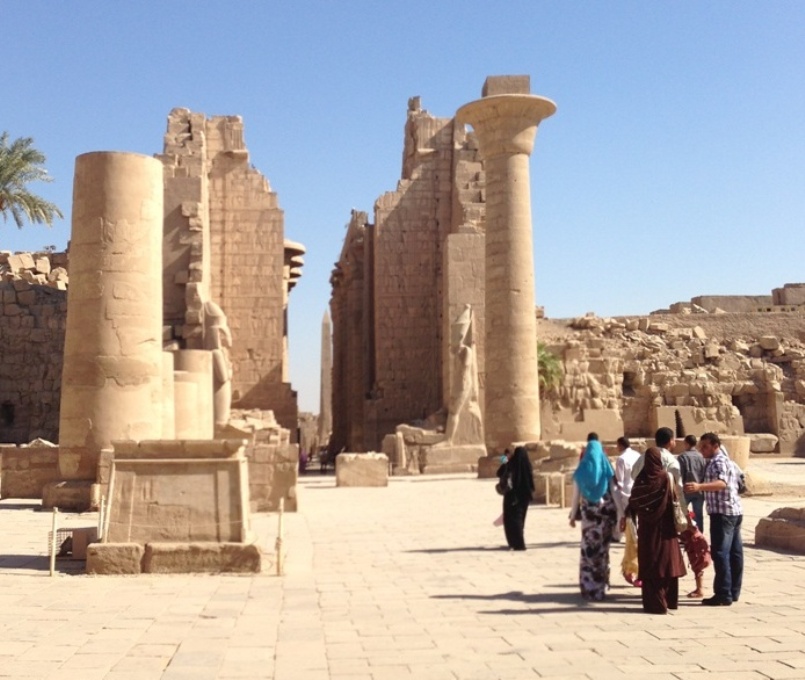
KARNAK TEMPLE
HOW CAN HUMANS WHO ARE SO SMALL HAVE BUILT COLUMNS WHICH ARE SO BIG?? THOUSAND OF YEARS AGO!!
More from Egypt soon
Brigitte
TWO WEEKS AGO EGYPT RESUMED THE HOT AIR BALLOONS SIGHTSEEING IN LUXOR
******************************************************************************
Getting up at 4 am was hard. It was dark outside, and I wondered why I had agreed to take a hot air balloon ride. In total darkness I left the hotel, found a car waiting for me with five people already sitting inside – nobody spoke – it was too early. After fifteen minutes of driving through dark country roads, we arrived at a field where small groups of people stood waiting.
Twelve huge, round forms lay on the ground, each on a white sheet like cloth. The men running around them were shouting orders to each other and when the first shimmer of daylight came we could see that these were our balloons.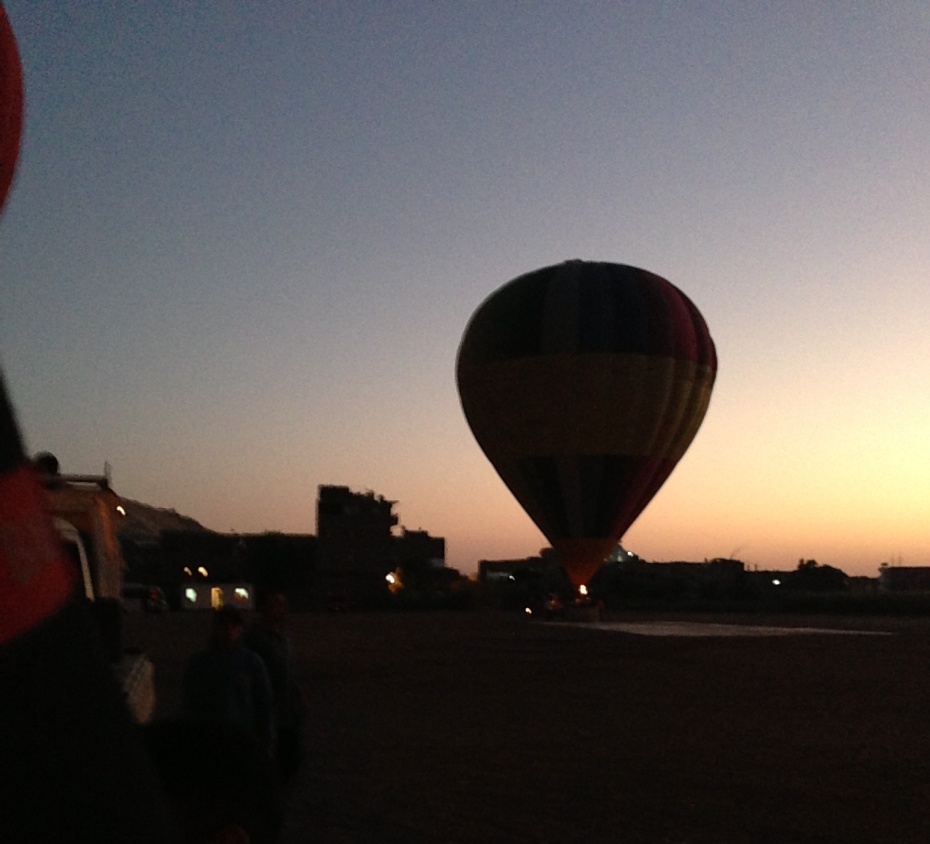
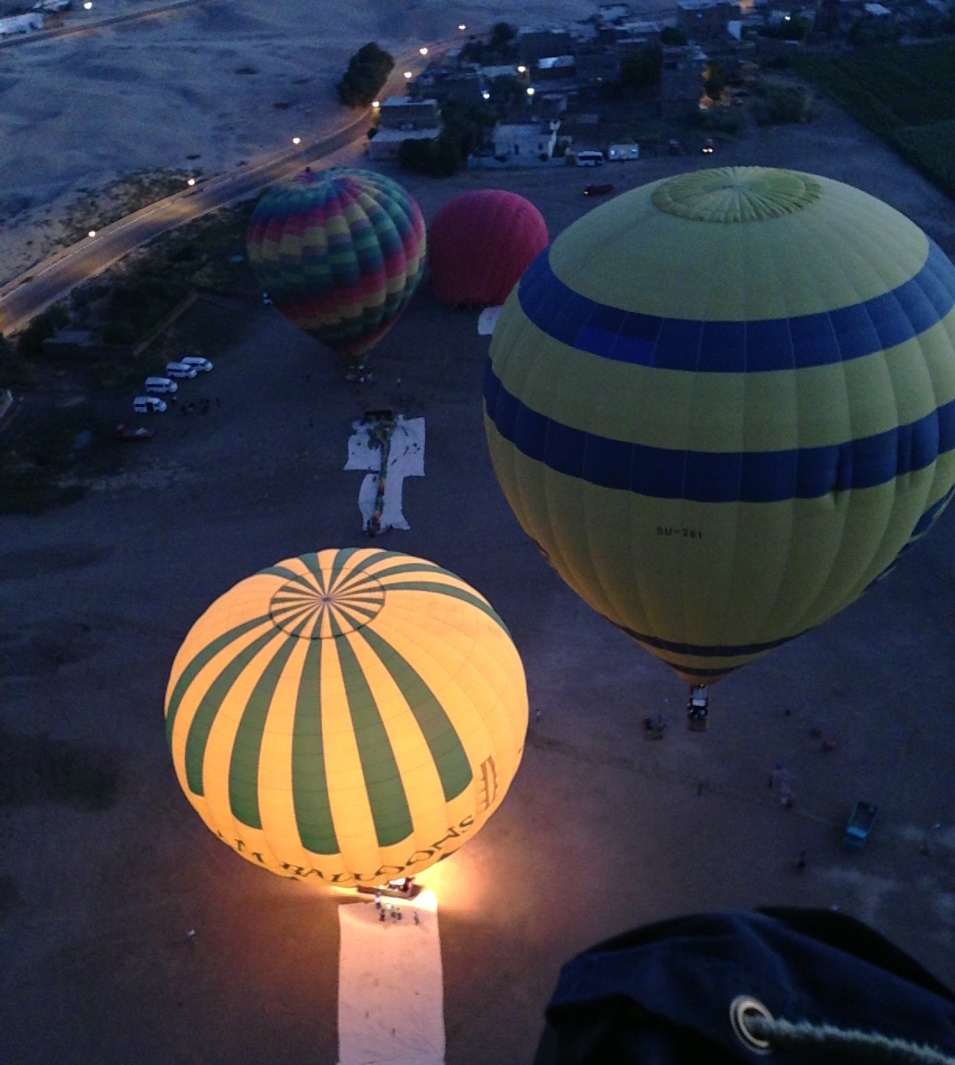
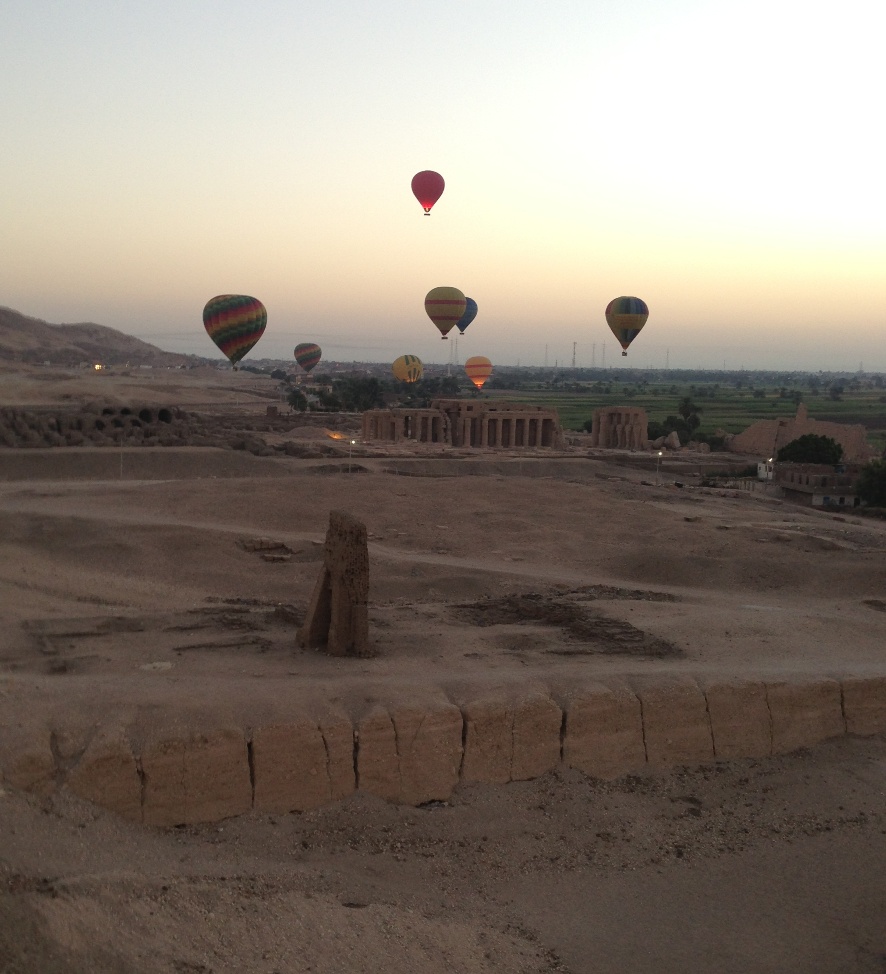
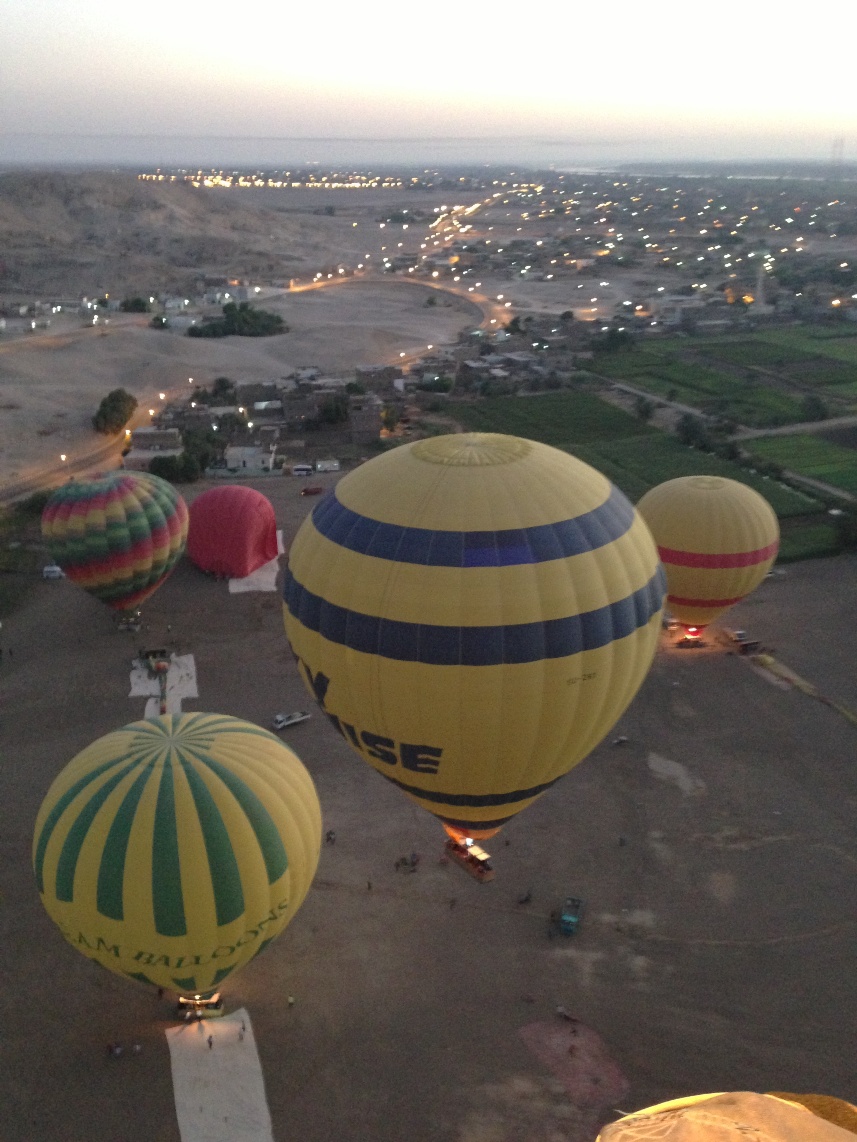
If I had a little apprehension, it quickly disappeared when the balloons took off – passing over sugar cane fields, with the upcoming sun shining on the Nile in the distance, 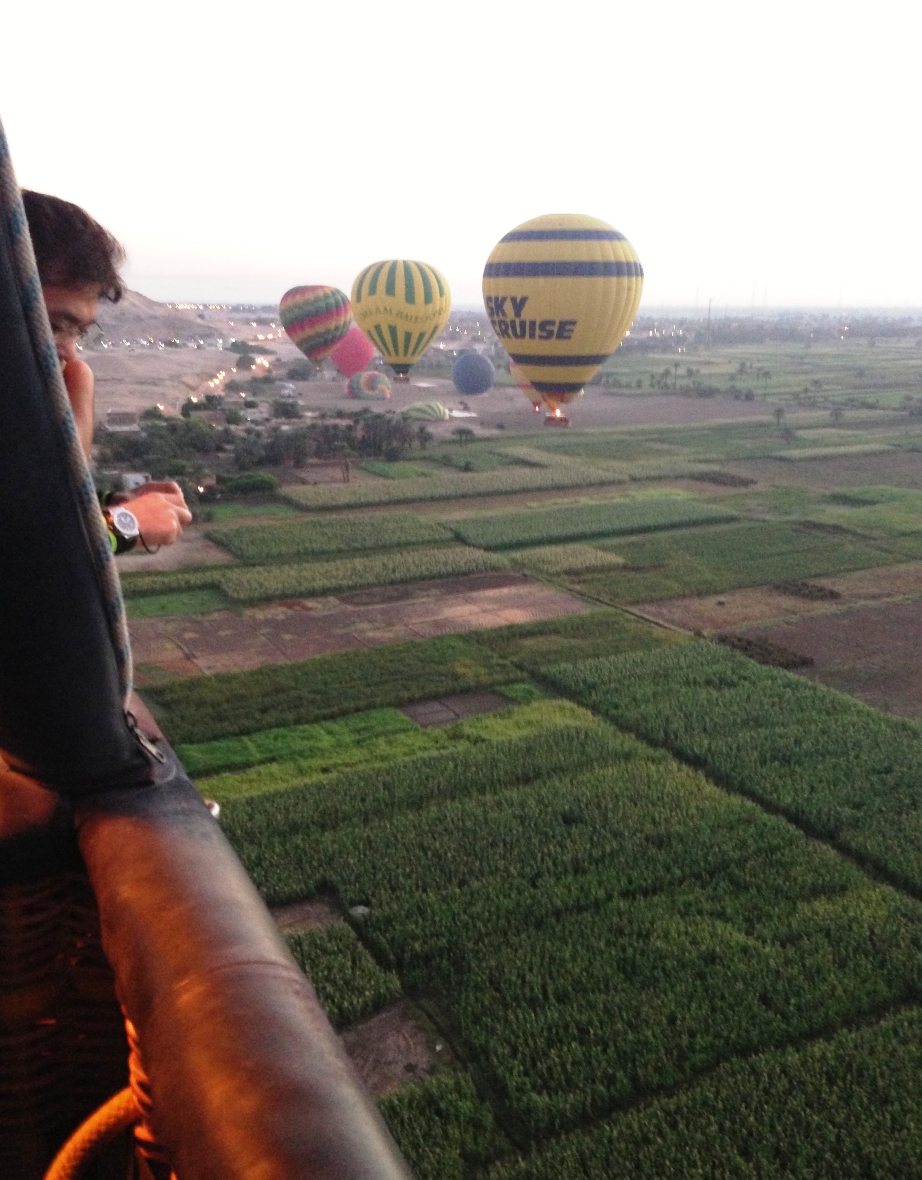
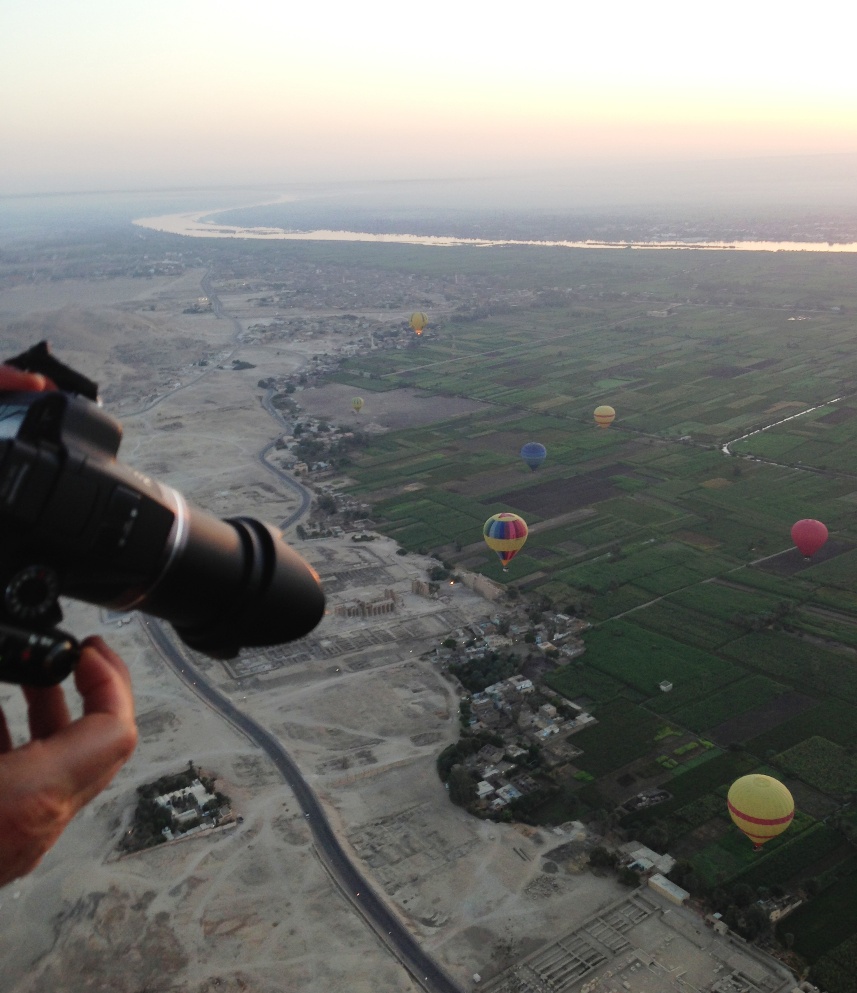 we were heading for the Valley of the Kings,
flying over the Ramesseum, one of Ramses II temples,
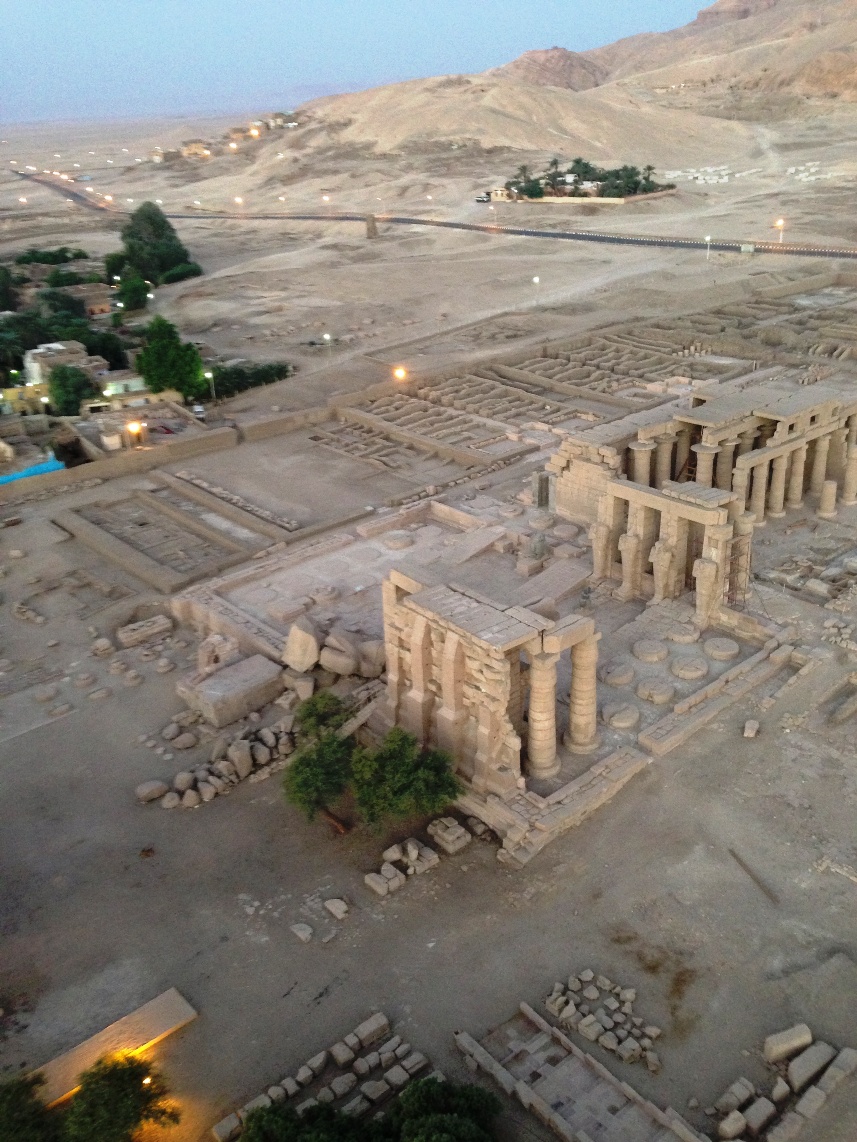
——–with our balloon climbing higher and higher we could see the imposing, dominant mountains of The Valley of the Kings and The Valley of the Queens, which for thousand of years have served as burial sites for many of Egypt’s pharaoh and their Queens, including Tutankhamun — and which still today guards many secrets.
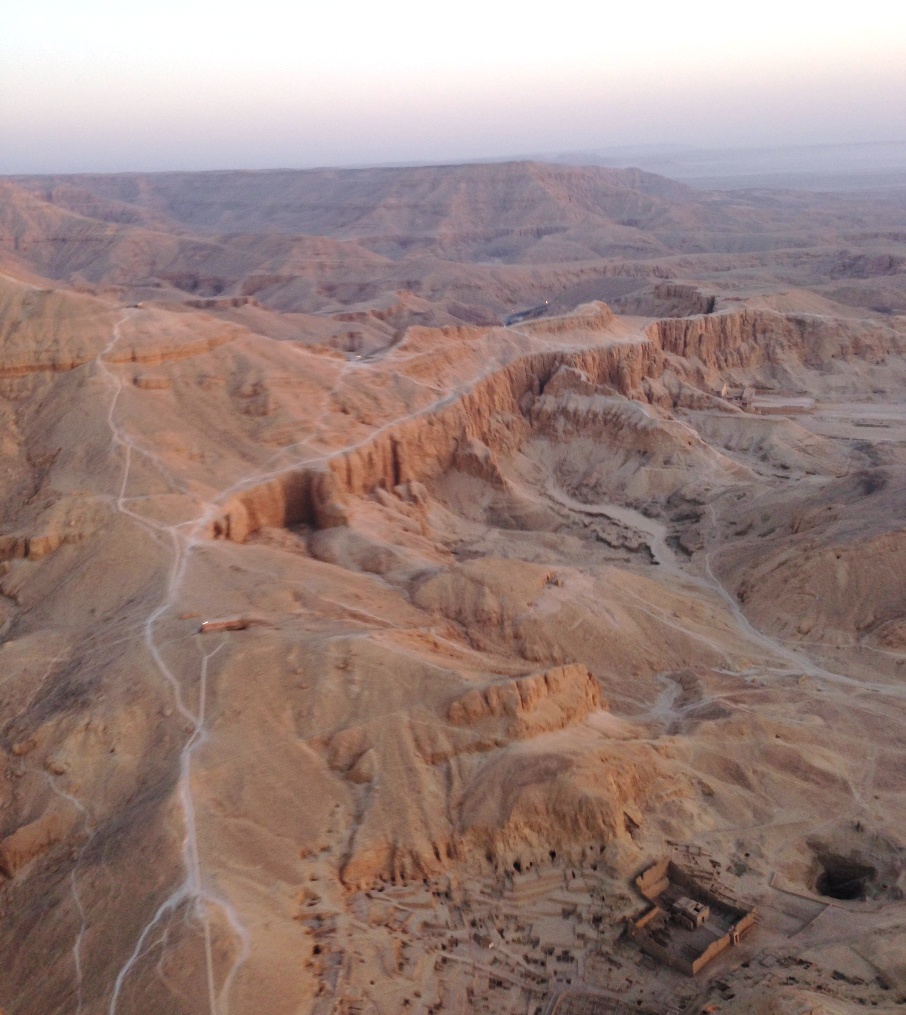
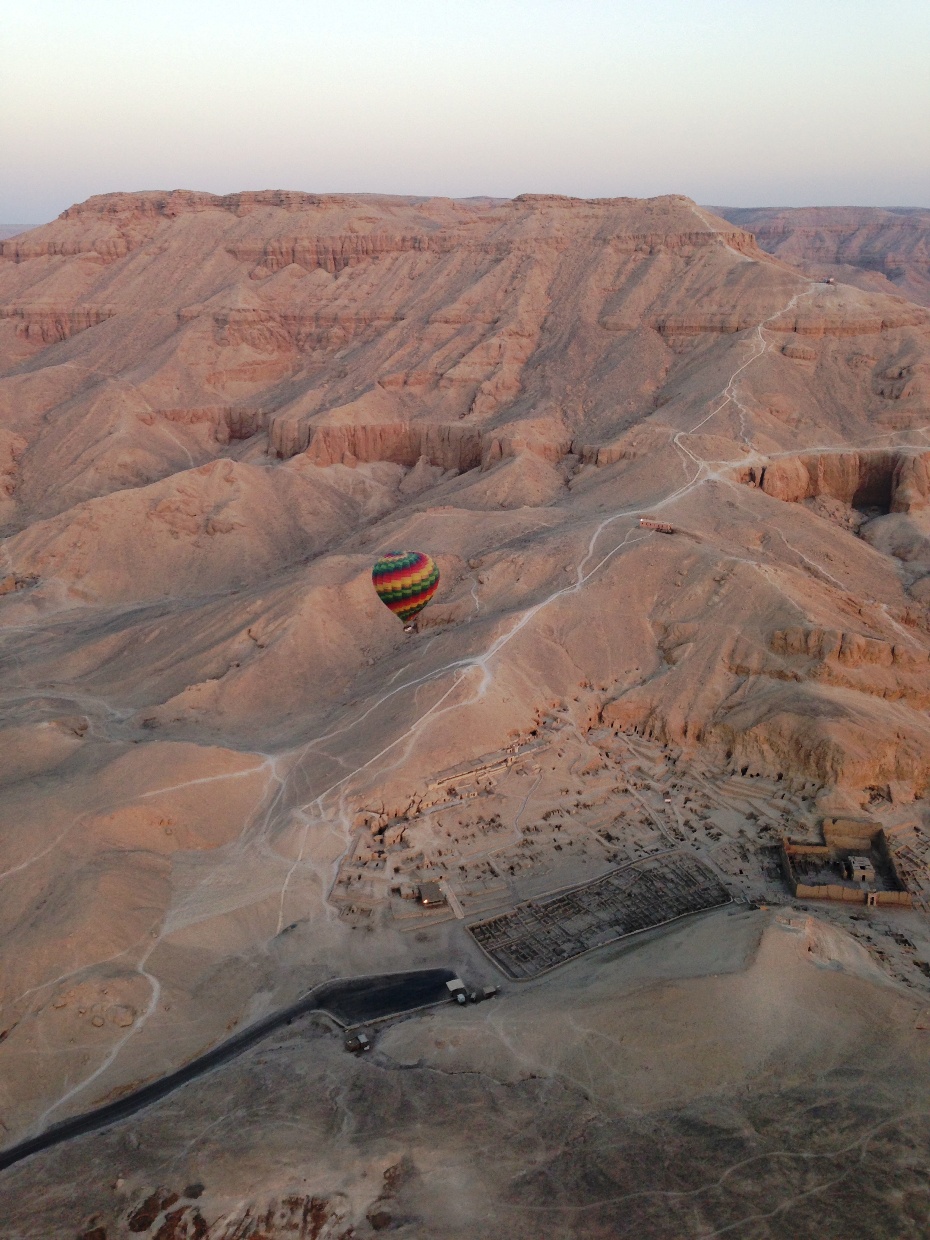
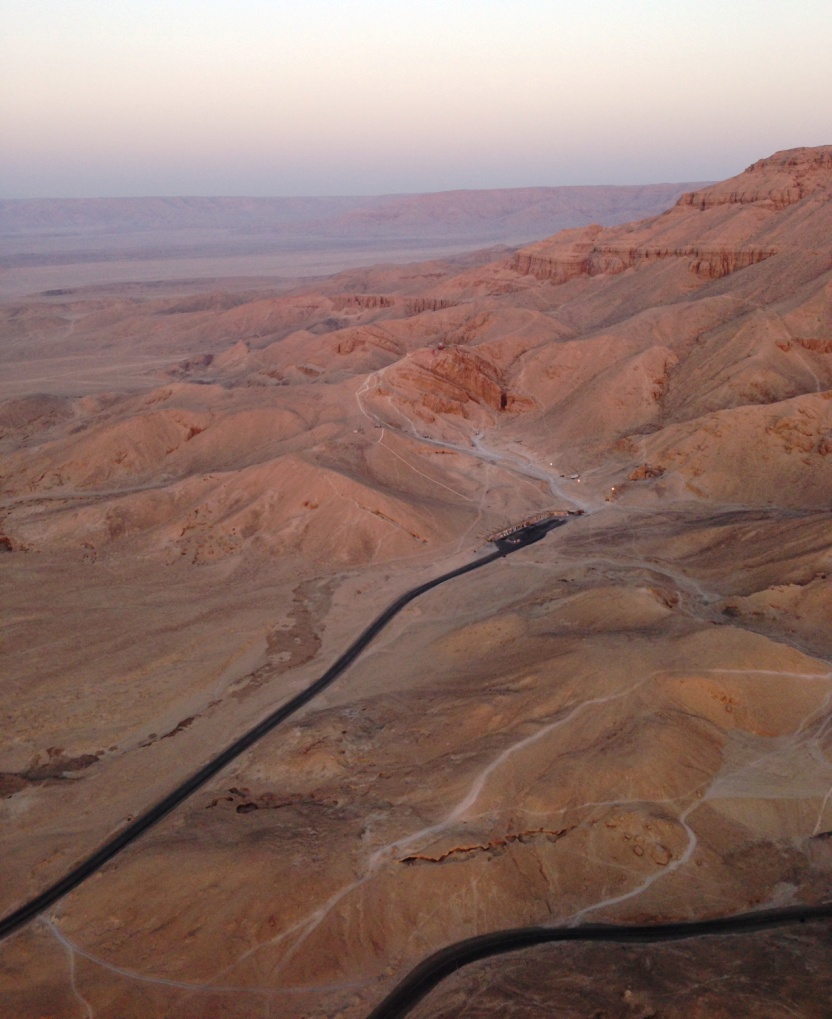
If I could only visit one of the many sites Egypt has to offer, it would be a visit to the Valley of the Kings in a hot air balloon. Nothing replaces the feeling of gliding high above these powerful, mysterious mountains, and the feeling of being part of eternity for a moment.
More from Egypt soon
Brigitte
IT IS A MATTER OF SIZE —– Looking at these feet, maybe he didn’t wear shoes?
The feet are part of a broken statue of Ramses II – which stood at the Ramesseum, on the West Bank of the Nile, near Luxor.
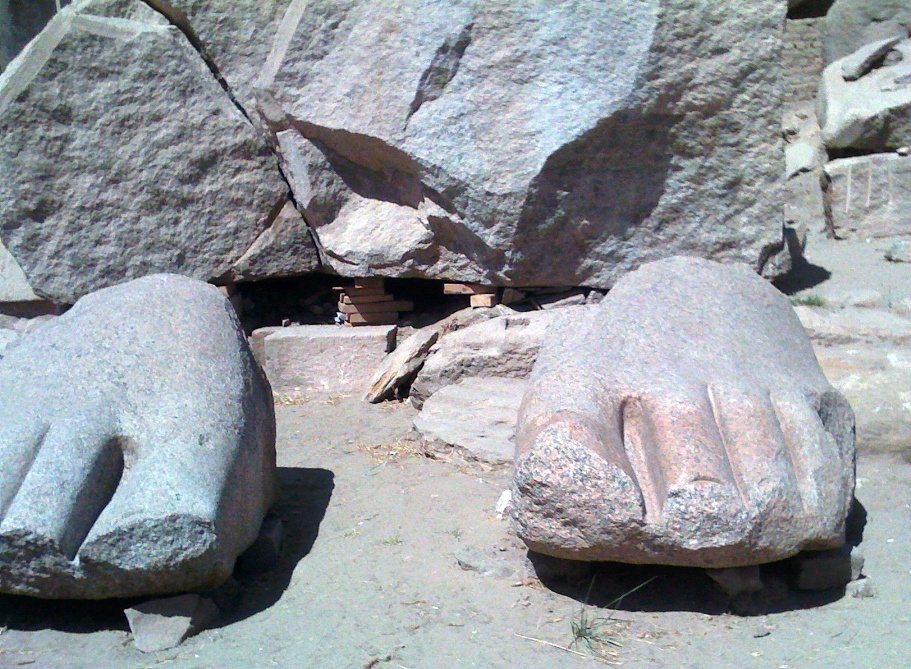
Ramses II was one of Egypt’s greatest pharaohs (1303 BC – 1213 BC) – he reigned his country for over 60 years.
More from Egypt soon
Brigitte
…..is challenging anywhere in the word!

Heated dispute between three drivers in the center of Alexandria
More from Egypt soon
Brigitte
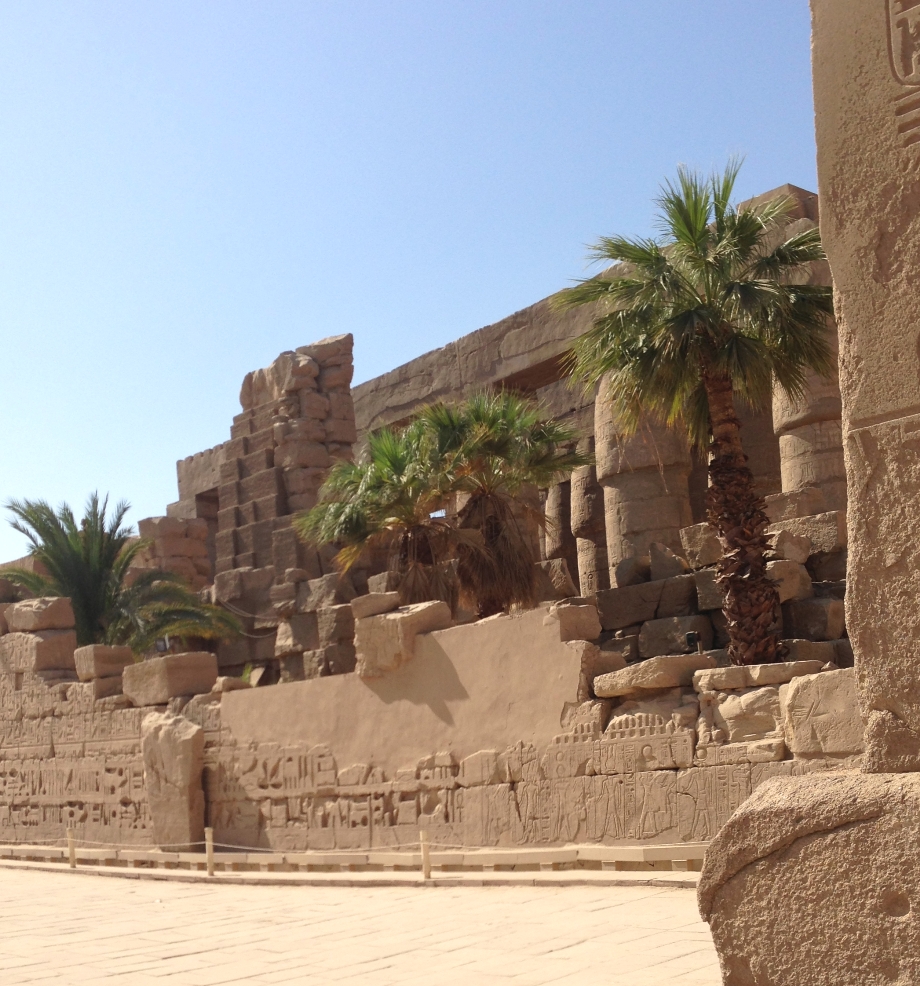
Visiting Karnak Temple during my last trip I had forgotten how brutal Egypt’s sun is at noon. When I arrived at the site around 11.45 am and saw the tourists going back to their air-conditioned buses I realized that my timing was off. It is early in the morning or late in the afternoon you visit Karnak, but here I was, having to make the best of it. The small, yellow parasol I had brought kept the sun off my face, but not the heat.
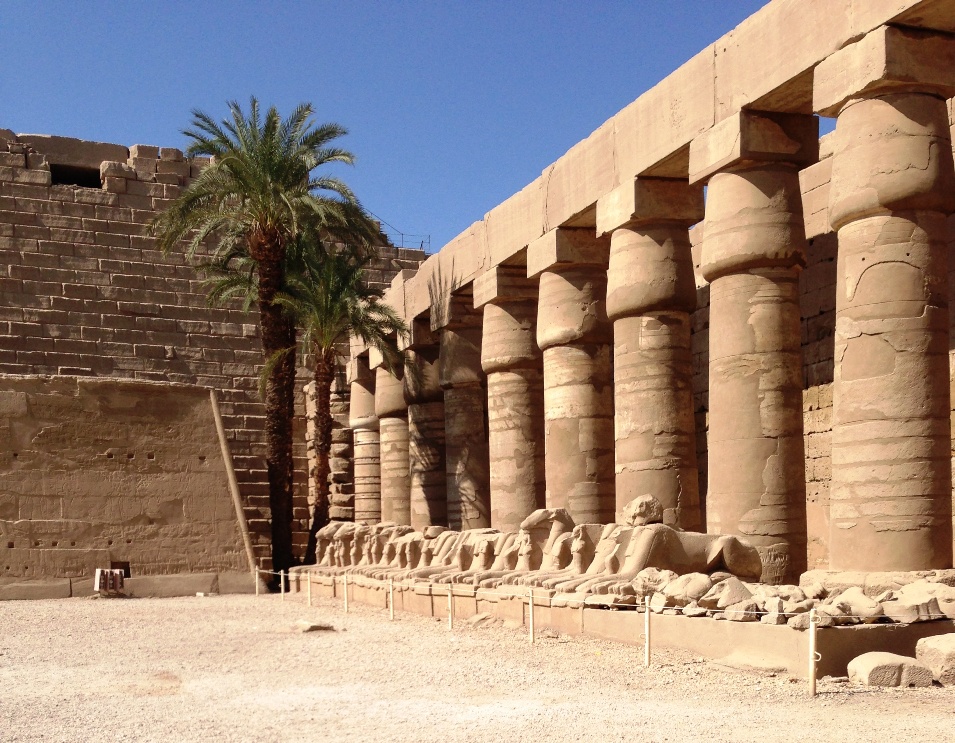
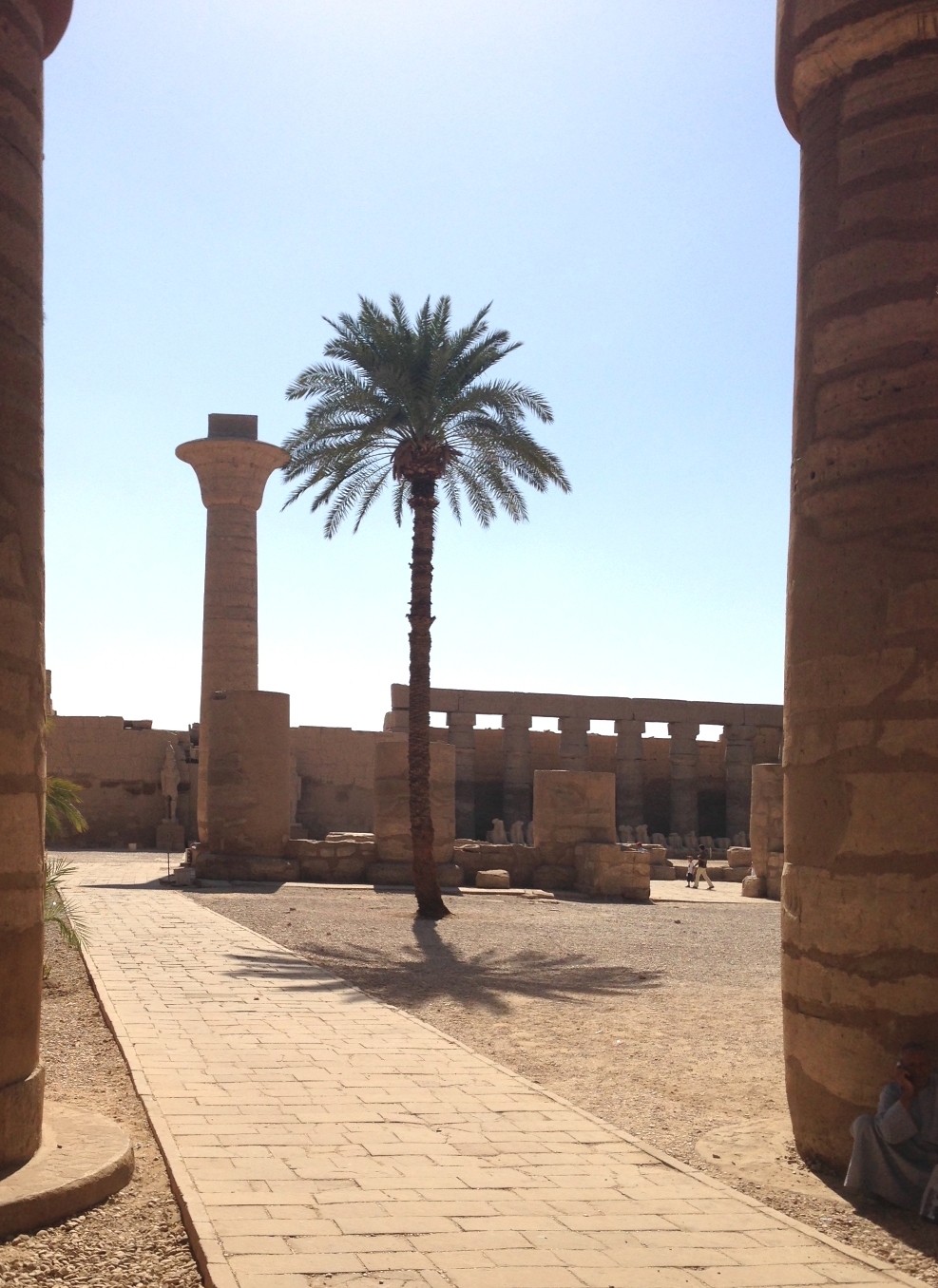
The ancient stones were baking in the sun as they had done for more than 3000 years, and except in the Great Hypostyle Hall where 134 columns, are lined up in 16 rows, there was no hiding from the sun.
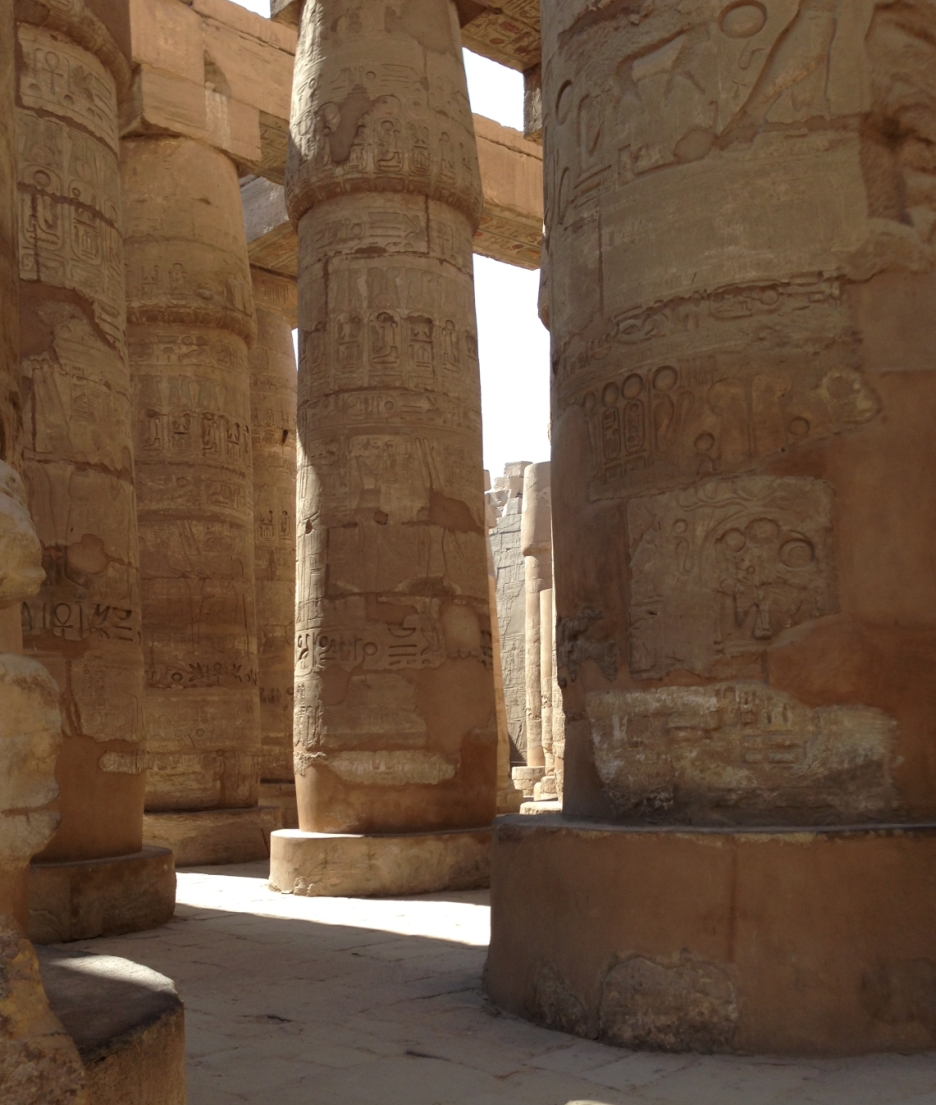
Part of the GREAT HYPOSTYLE HALL
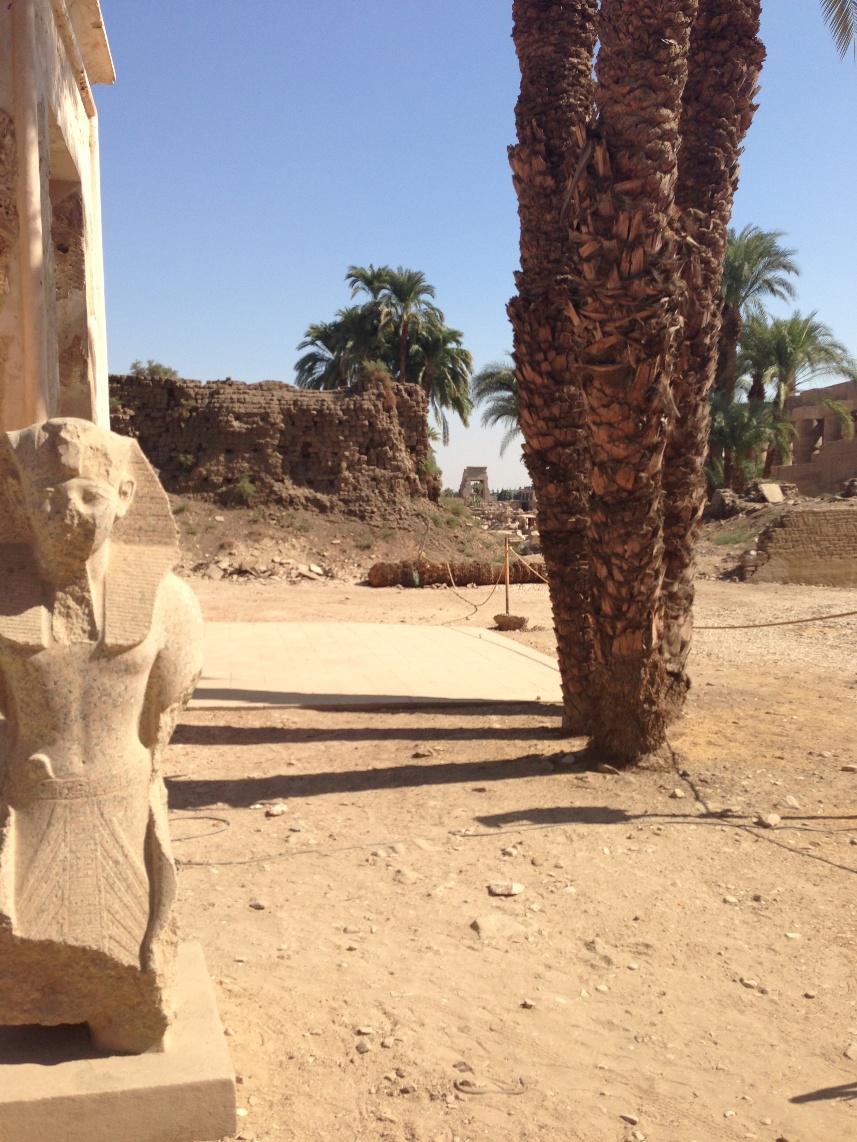
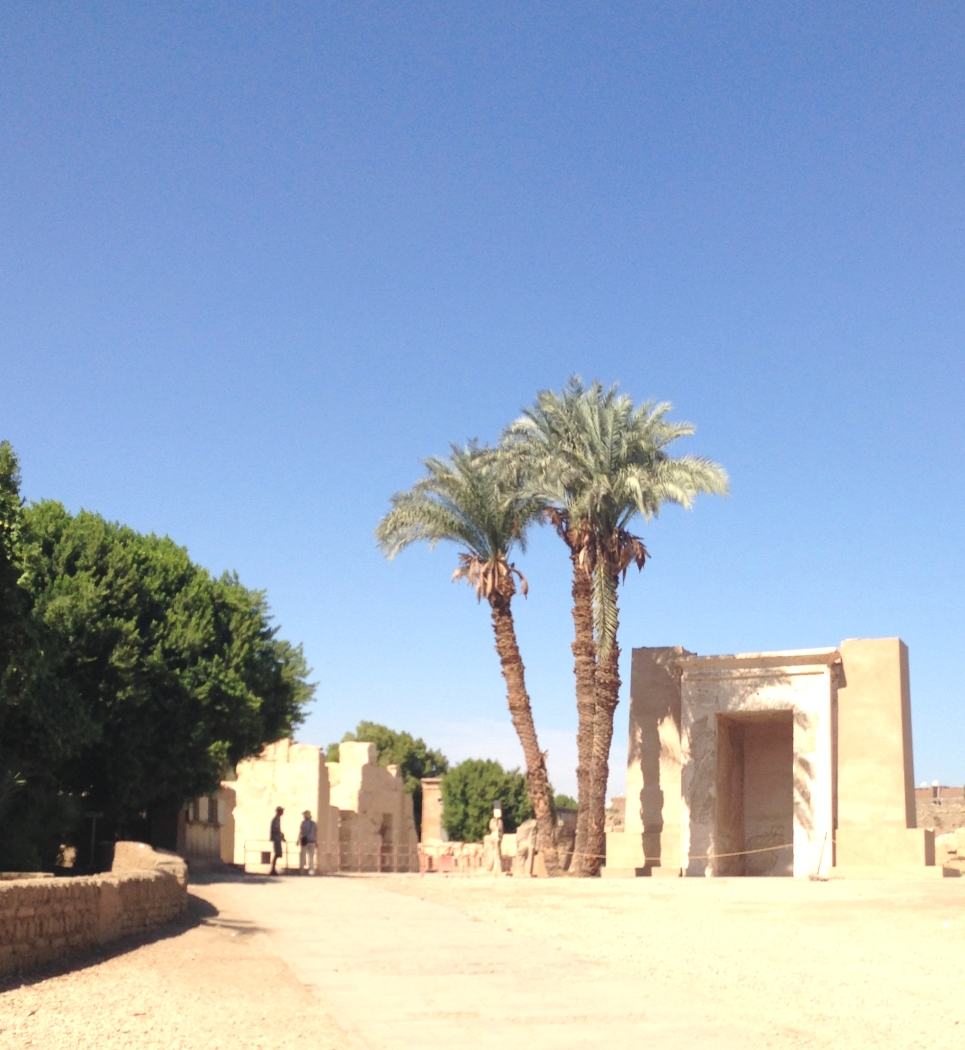
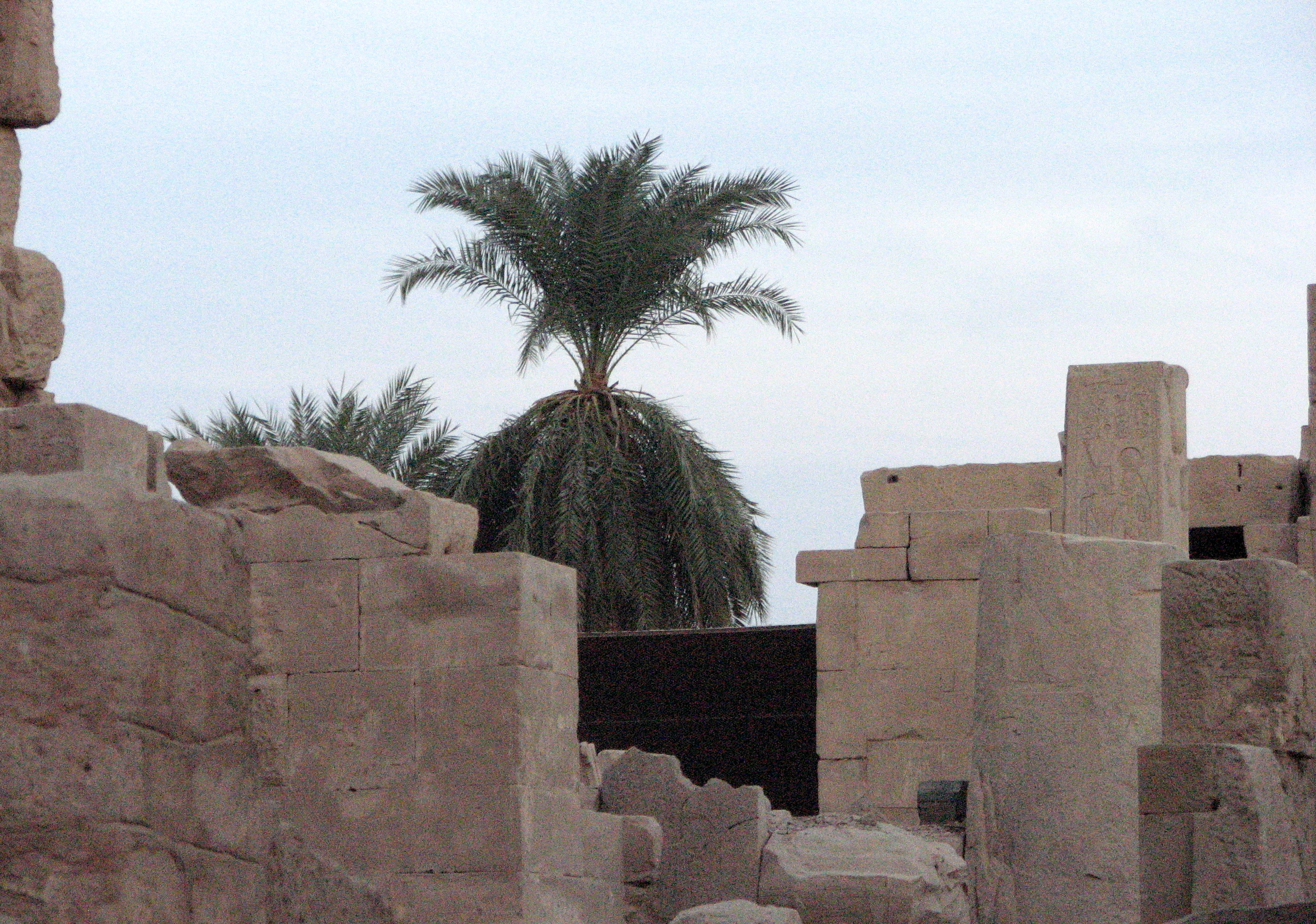
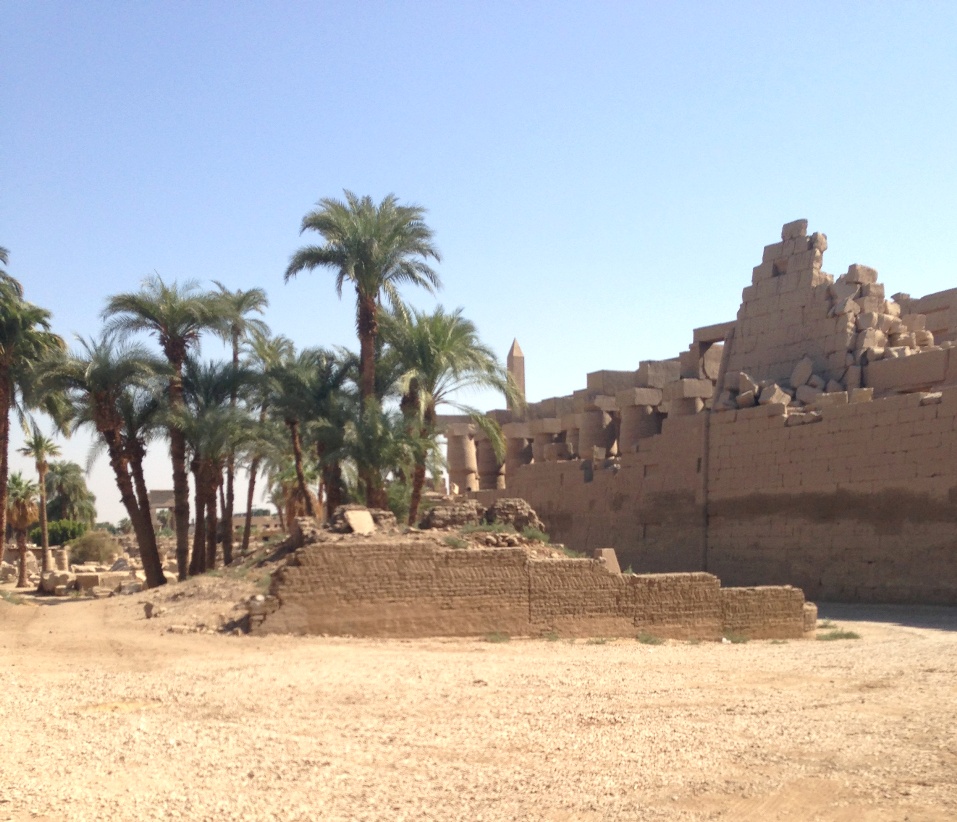
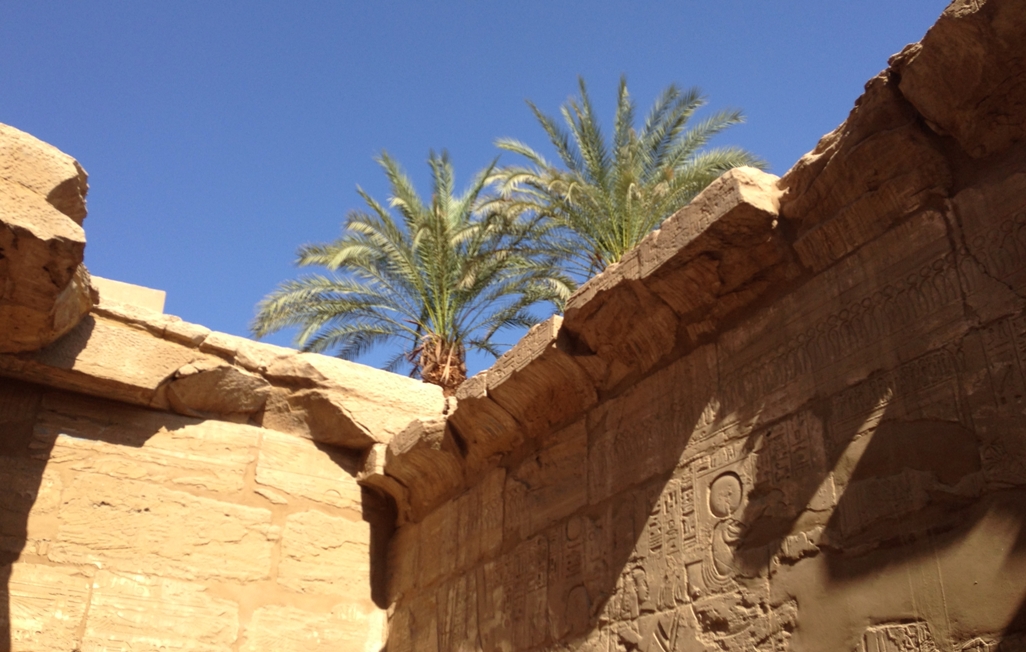
But I had not come only to stand between the columns; so with my water bottle in one hand and my camera in the other I continued my visit trying to forget how hot I really was. 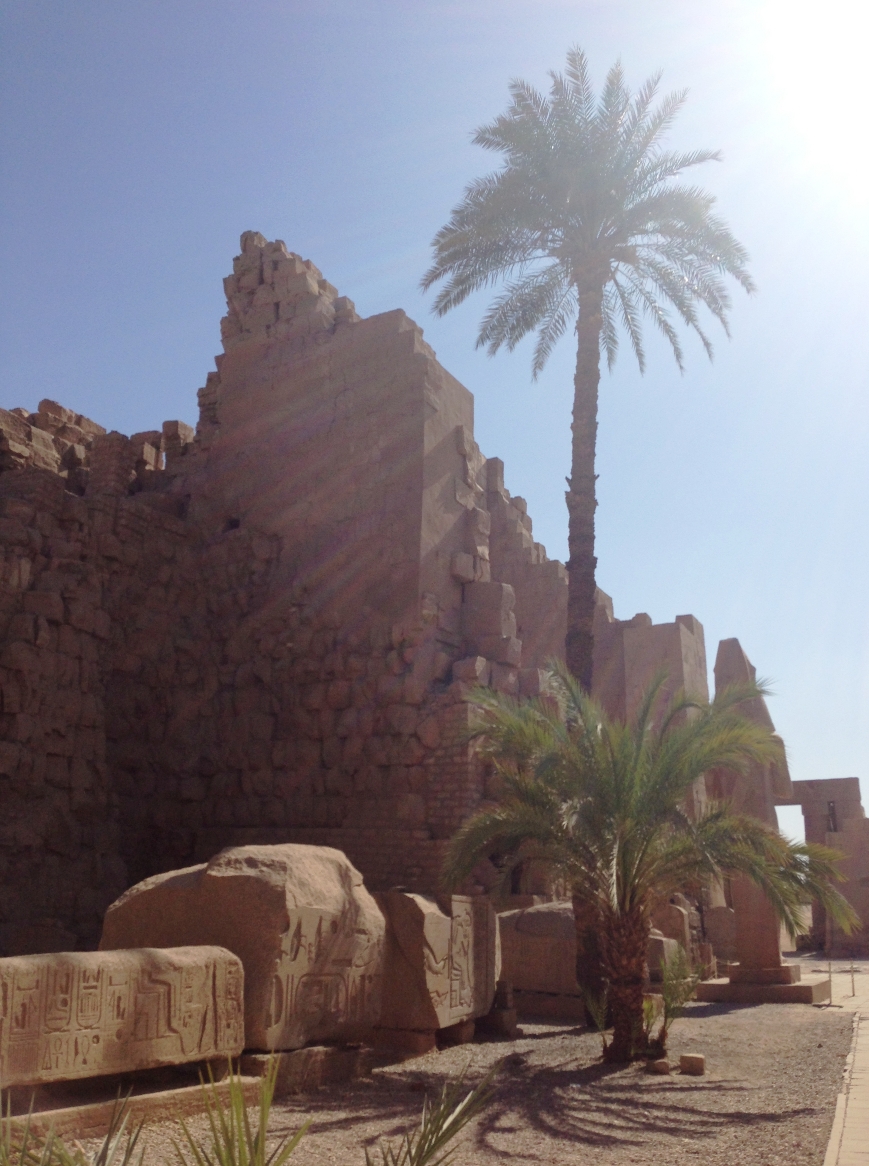 Suddenly, the rays of the sun illuminated something green. It seemed like an oasis in the desert. Was it my imagination? Had the heat affected me? No – a beautiful, tall palm tree was standing, like a guardian next to the old ruins.
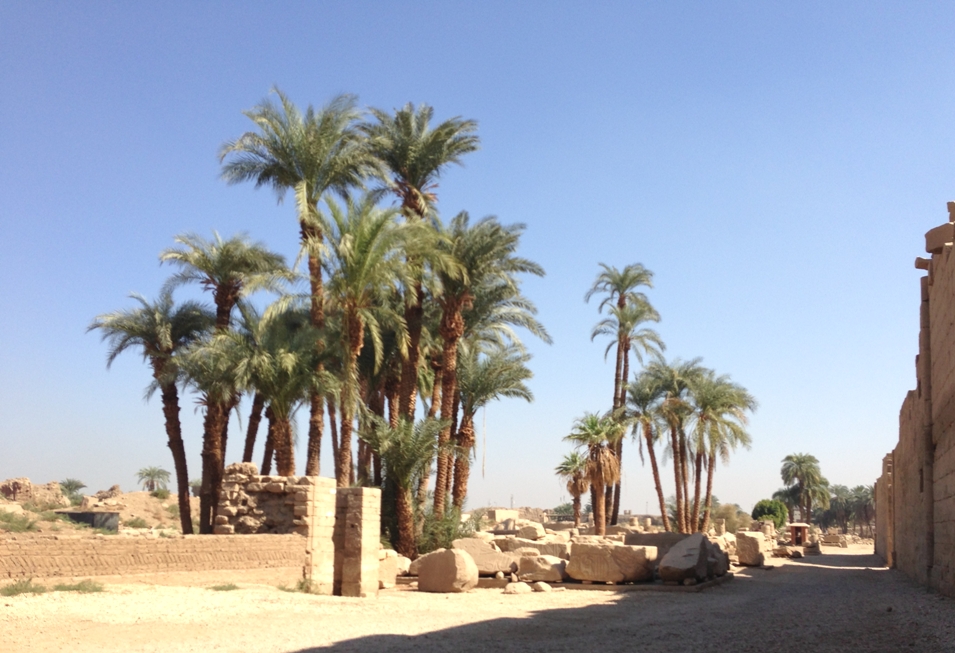
As I discovered that afternoon there are many palm trees at Karnak Temple. Maybe their purpose is to tell us that long ago, before there were just stones, before the temples and holy sites had crumbled, there was life here!
More from Egypt soon
Brigitte
……is challenging anywhere in the world!
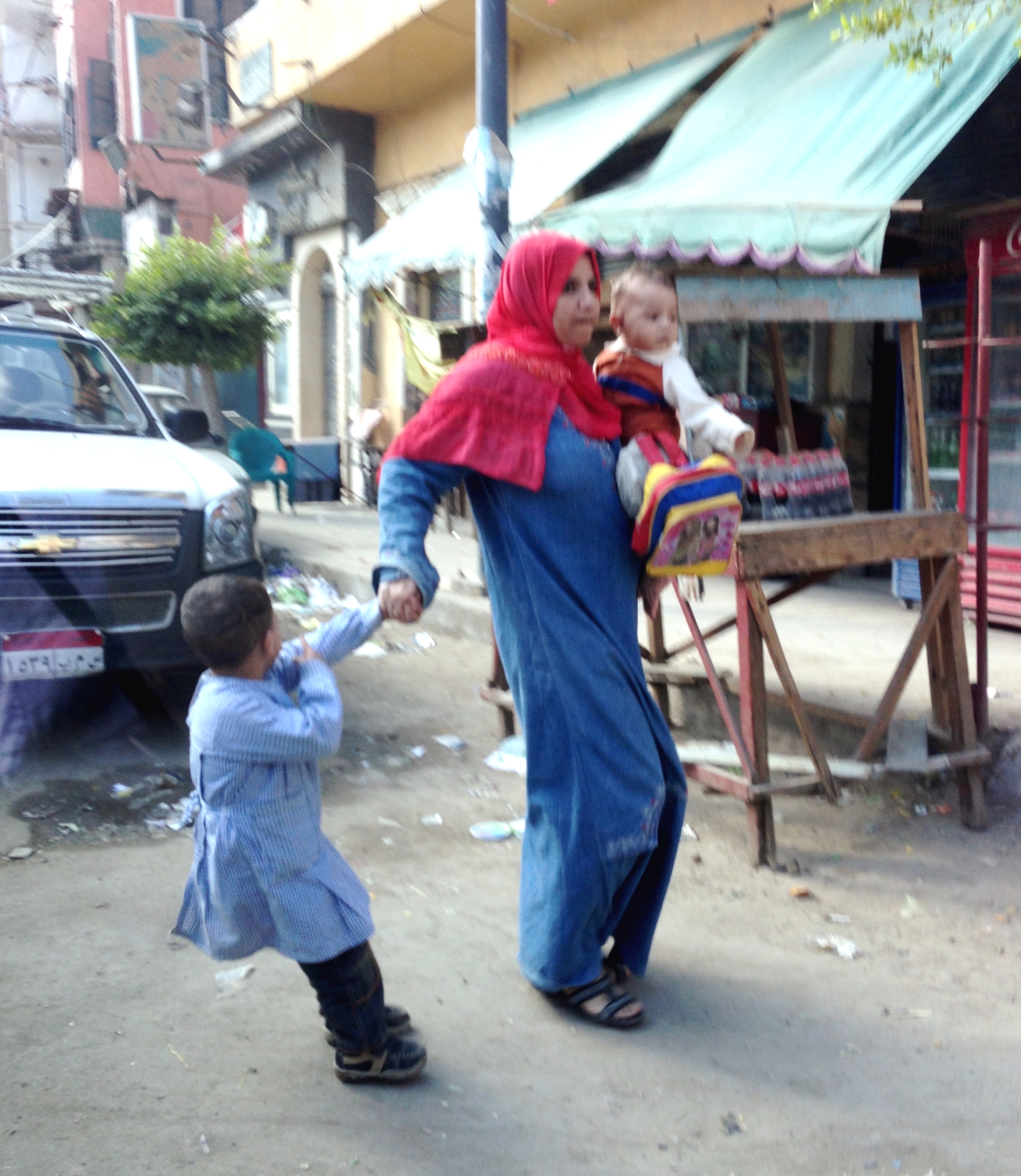
In a Shopping Area in Alexandria
More from Egypt soon
Brigitte
Winding our way through Cairo’s traffic, we were finally on the road to Alexandria. After two hours we reached the outskirts of town, closer to the famous Corniche, a water front promenade that runs for 10 miles along the Mediterranean. When we reached it the traffic was dense and slow, but I didn’t mind. It gave me a chance to see up close the famous boardwalk of Alexandria I had so often heard about.
When, what seemed like the end of the Corniche, our car turned away from it, I was getting worried about where my hotel was located – the travel agent had promised a view on the Mediterranean. Asking the driver, he answered, “Your hotel, the Helnan Palestine, is the only Hotel in the Montaza Palace Grounds.” Palace grounds? I was reassured, but didn’t know what Palace he was talking about.
Not wanting to show my ignorance, I asked, while checking in where the palace was. “Oh, you mean King Farouk’s Summer Home – just up the road, five minutes walk”
“When can it be visited?” I asked “It is not open to the public.” she replied, and seeing my disappointed face, she added, “but when your Mr. Obama comes he can stay there.” (I hope Mr. Obama knows that, it might make him visit sooner).
When stepping on to the balcony – beside the ocean stretching far into the distance – this it what I saw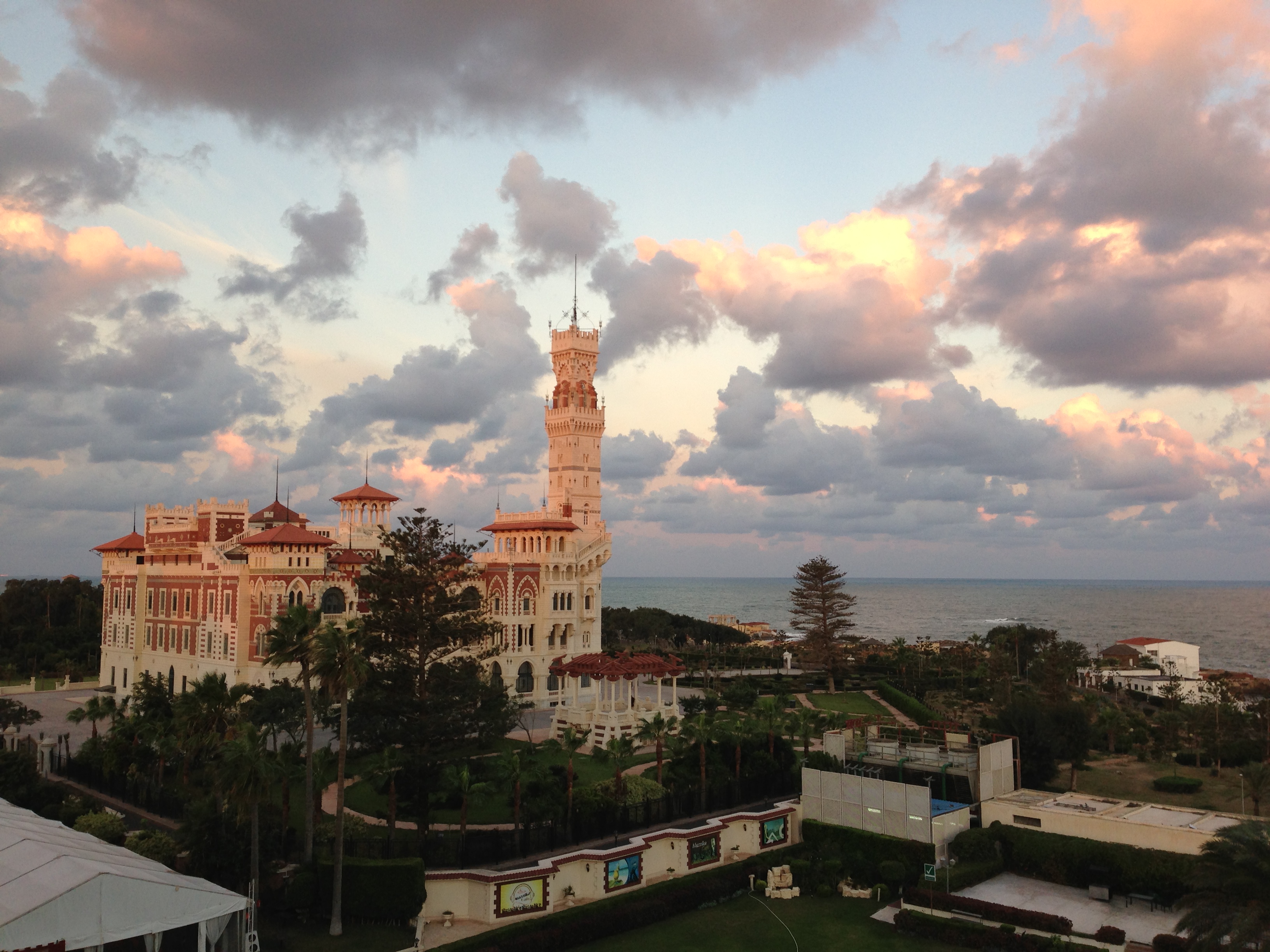
— the beautiful, mysterious Al-Haramlik Palace, hanging over the cliffs near the ocean in the Al-Montaza gardens, a 360 acre complex, stretching along the sea. It looked mysterious, enticing, remote and above all it made me think of the Thousand and One Night fables, wondering who might be passing along the open arcades facing the sea along each floor. The morning glow, sunlight, dusk, and night all add to its beauty in their own way and it never loses its magic.
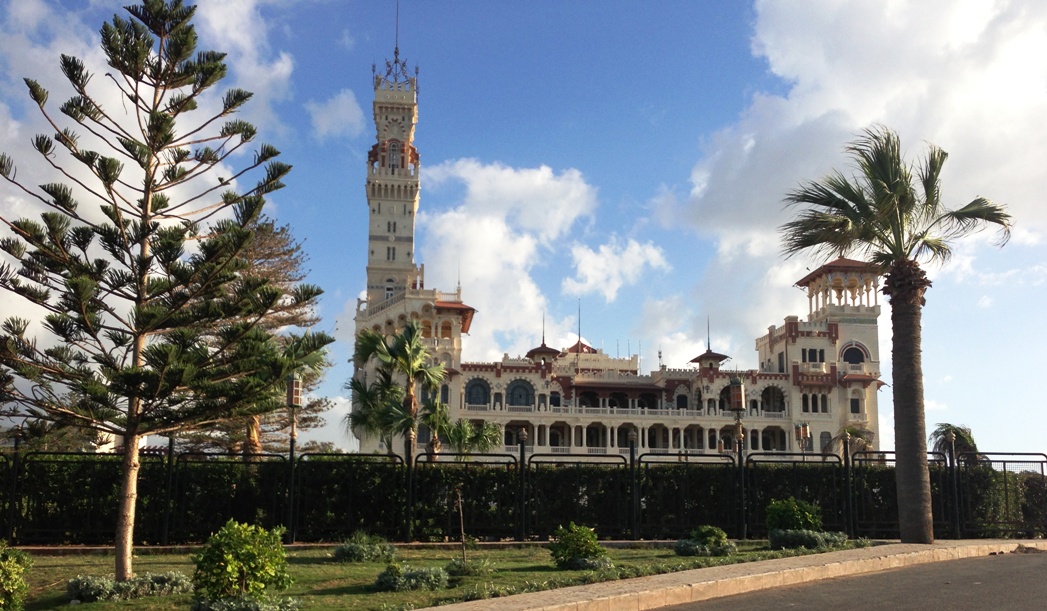
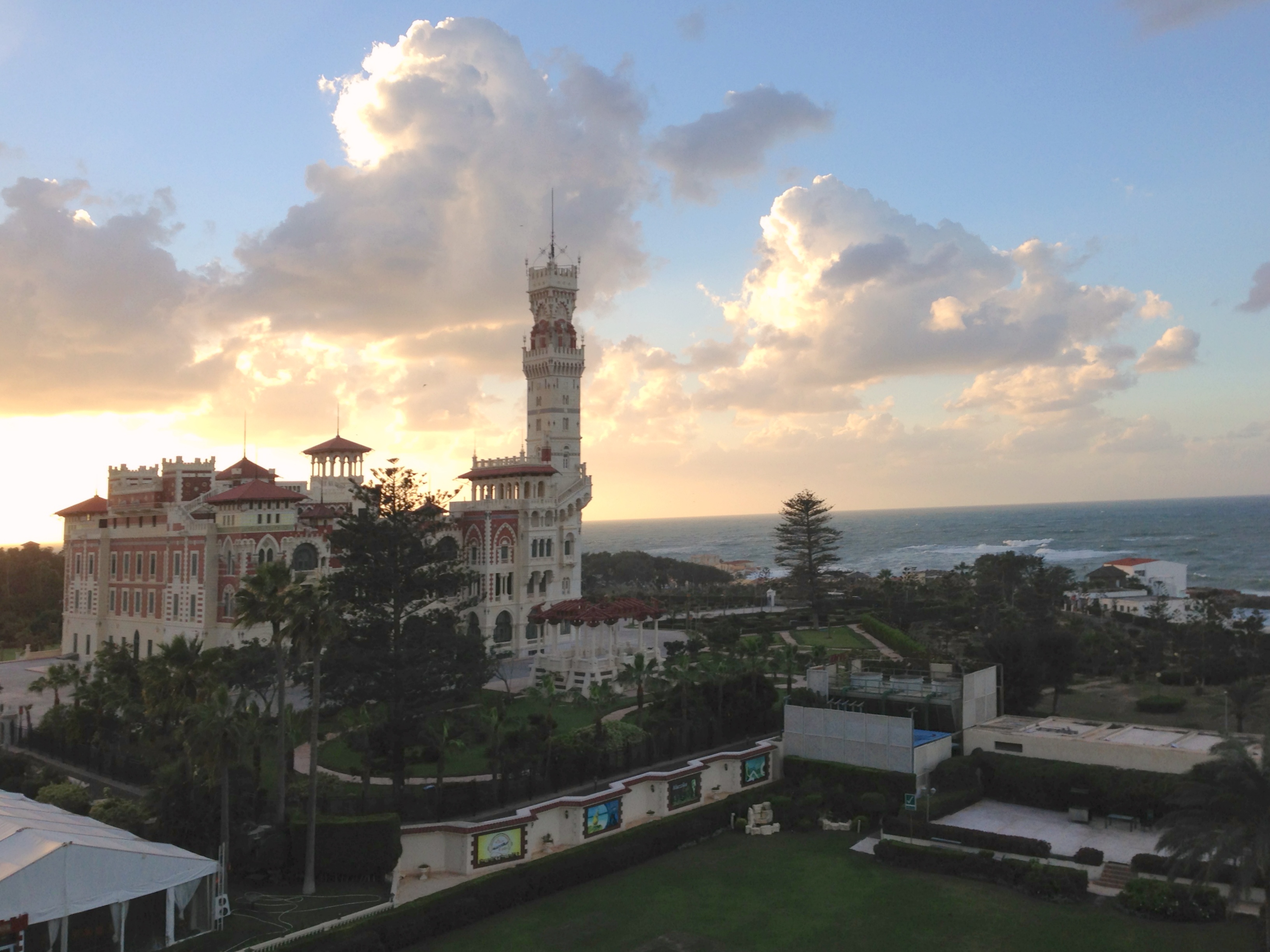
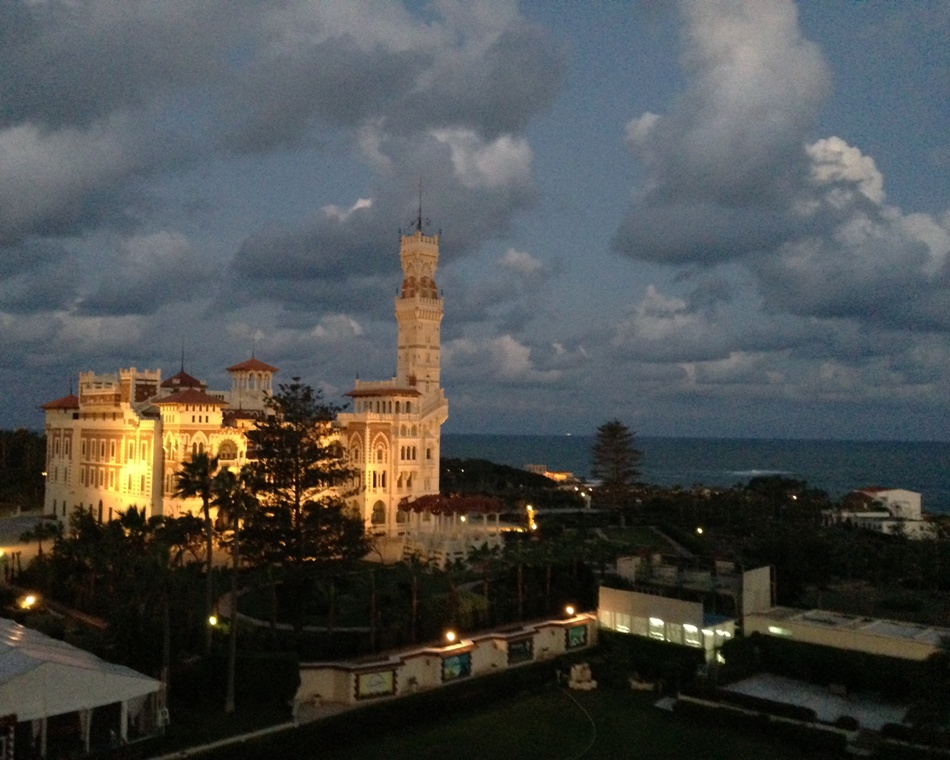
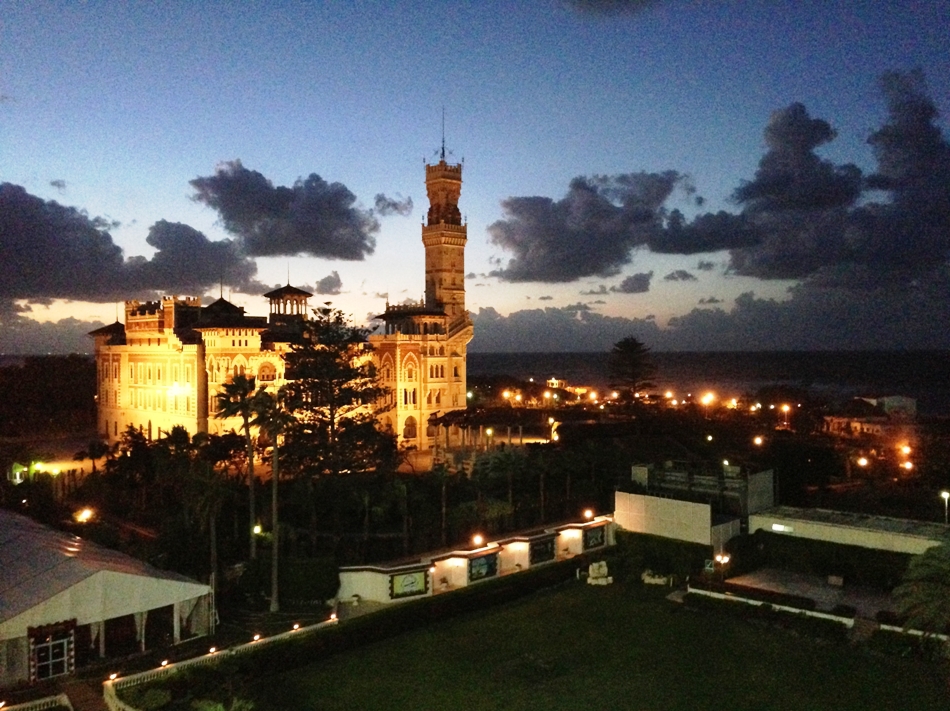
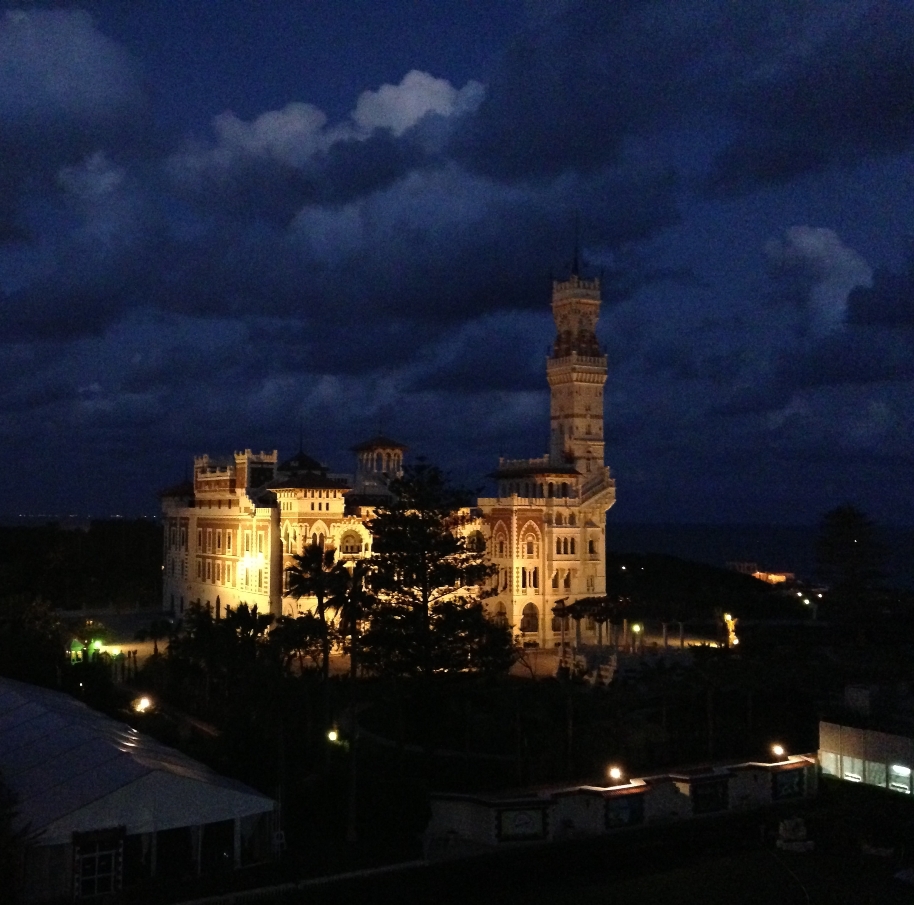
The original palace was enlarged to its present size in 1932 as a summer residence by King Fuad I. When King Farouk I, the last King of Egypt, became King in 1936, at the age of 16 it remained a summer home for Egypt’s Royal family until the King’s overthrow in 1952.
Then it became the property of the government and is used as an official presidential residence, as well as hosting foreign dignitaries when they visit Egypt.
Moore from Egypt soon
Brigitte
Thinking that a man wearing a cowboy hat at Karnak Temple can only be an American, I found out quickly that I was wrong. 
“We are from Syria and we are here on our honeymoon.” After I had taken their picture, he asked, “Can I take a photo of my wife and you?”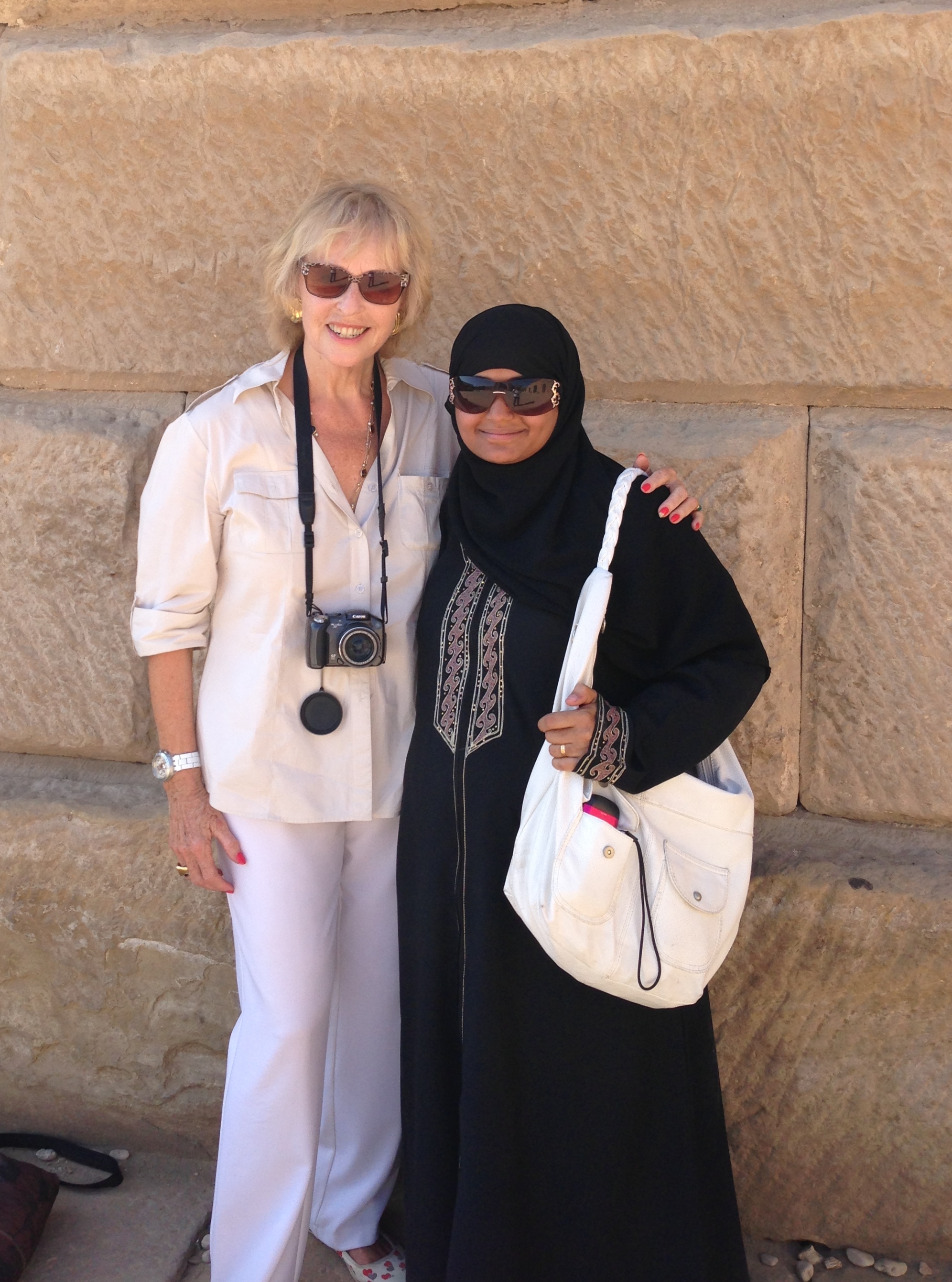
When I put my arm around her, the pictures we see daily from Syria on our television flashed through my mind – and all I could think is that I hope their honeymoon will continue once they are back home.
More from Egypt soon
Brigitte

Other titles - Dress for Success, The Sensual Dresser, What Turns Men On.

 Visit My Other Blog – Getting Over Growing Older
 Egypt My Love